
 INDIA DEFENCEDhruv NG Helicopter Explained: What HAL Has Actually Put Into Pawan Hans Service
 INDIA DEFENCELCA FOC Trainers Delivered With HTT 40 and Dhruv NG as Rajnath Singh Asks Engineers for Technologies That Do Not Exist
 DEFENCE INDUSTRYTata Zorawar light tank clears Army's L1 hurdle for Rs 20,000 crore contract
 DEFENCE INDUSTRYIndia Belgium Defence Deals Sealed As PM De Wever Visits Delhi
 DEFENCE INDUSTRYAero India 2027 Dates Confirmed for February 8 to 12 in Bengaluru
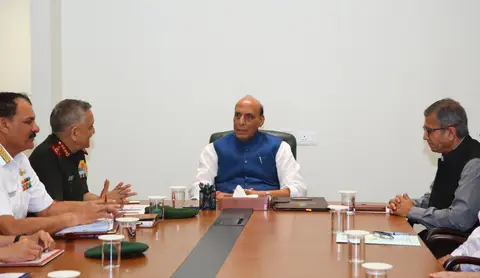
The Defence Acquisition Council (DAC) is the apex decision-making body within India's Ministry of Defence for capital acquisitions. Chaired by the Raksha Mantri, the Defence Minister, it provides the highest-level approvals for the procurement of major weapons, platforms and equipment for the armed forces, and gives policy direction to the entire acquisition process. Its decisions shape the modernisation of the Army, Navy and Air Force and influence the flow of orders across the defence industry.
Purpose and Composition
The DAC was constituted to bring coherence and speed to defence procurement, ensuring that acquisitions are aligned with the operational priorities of the services and with national policy. It is chaired by the Defence Minister and includes senior civil and military leaders of the Ministry of Defence, among them the service chiefs, the Chief of Defence Staff, the Defence Secretary and other senior officials responsible for finance, production and acquisition.
Its overarching role is to approve the long-term capability plans of the armed forces and to authorise individual acquisition proposals at key stages, giving strategic direction to the procurement machinery beneath it. In doing so it shapes demand across the entire defence industrial base, including the defence public sector undertakings and the wider landscape of Indian defence manufacturing.
Role in the Acquisition Process
The DAC operates at the top of a structured procurement system governed by India's defence acquisition procedures. A central milestone in that process is the grant of an Acceptance of Necessity (AoN), by which the DAC formally accepts the need for a particular acquisition and clears it to proceed. Its principal functions include:
- Approving capability requirements: endorsing the long-term and annual acquisition plans of the services.
- Granting Acceptance of Necessity: sanctioning individual procurement cases to move forward.
- Deciding acquisition categories: determining whether a proposal is met through indigenous development, domestic manufacture or import.
- Providing policy direction: guiding the overall framework for defence procurement.
The categorisation decisions taken by the DAC are especially significant, because they influence whether contracts flow to Indian designers and manufacturers or to foreign suppliers. Decisions favouring indigenous routes support organisations such as the DRDO and manufacturers including Hindustan Aeronautics Limited, and shape orders for platforms and systems across the services, from aircraft and warships to electronics and missiles.
Impact on the Defence Ecosystem
Through its approvals, the DAC effectively sets the direction of India's military modernisation. Its decisions determine which aircraft, ships, missiles and other systems the armed forces will acquire, and by what route. Acquisitions cleared by the council translate into orders for indigenous programmes such as the Tejas Mk2, for warships built by Indian shipyards, and for missiles produced by Bharat Dynamics Limited.
By emphasising indigenous design and manufacture wherever feasible, the DAC has become an important instrument of the government's self-reliance agenda, steering demand towards domestic industry and encouraging participation by private firms and start-ups alongside the established public sector. Its choices ripple through the supplier base, influencing investment, capacity and technology development across the sector, and providing the long-term visibility that industry needs to plan.
As the apex body for defence acquisition, the DAC sits at the intersection of strategy, finance and industry. Its approvals convert the armed forces' capability needs into concrete programmes, balancing operational urgency, budgetary limits and the goal of building domestic capability. As the armed forces modernise across every domain and the government presses for greater indigenisation, the council's role in prioritising programmes and directing resources becomes ever more important, making the DAC one of the most consequential institutions in shaping the future of India's defence. By setting priorities, clearing programmes and steering demand towards domestic industry, the council links strategic intent to industrial outcome, and its stewardship of the acquisition process will remain a decisive factor in how effectively and how independently India equips its armed forces in the years ahead.