
 INDIA DEFENCEDhruv NG Helicopter Explained: What HAL Has Actually Put Into Pawan Hans Service
 INDIA DEFENCELCA FOC Trainers Delivered With HTT 40 and Dhruv NG as Rajnath Singh Asks Engineers for Technologies That Do Not Exist
 DEFENCE INDUSTRYTata Zorawar light tank clears Army's L1 hurdle for Rs 20,000 crore contract
 DEFENCE INDUSTRYIndia Belgium Defence Deals Sealed As PM De Wever Visits Delhi
 DEFENCE INDUSTRYAero India 2027 Dates Confirmed for February 8 to 12 in Bengaluru
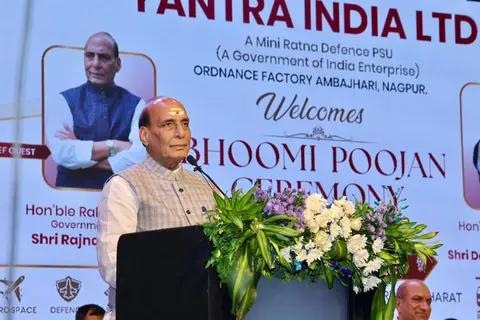
The Ordnance Factory Board (OFB) was, for many decades, the umbrella organisation that ran India's network of government ordnance factories, producing ammunition, weapons, vehicles, clothing and equipment for the armed forces and paramilitary services. In 2021 the government reorganised the OFB into seven new defence public sector undertakings, in a major restructuring intended to improve efficiency, accountability and competitiveness across one of the oldest parts of India's defence industrial base.
The 2021 Reorganisation
Under the reform, the erstwhile Ordnance Factory Board was dissolved and its factories were grouped into seven wholly government-owned corporate entities, each focused on a distinct product domain. The stated aims were to give the factories greater functional autonomy, improve their responsiveness to the armed forces, and enable them to compete for orders and pursue exports as commercial enterprises rather than as a departmental organisation operating under a single board.
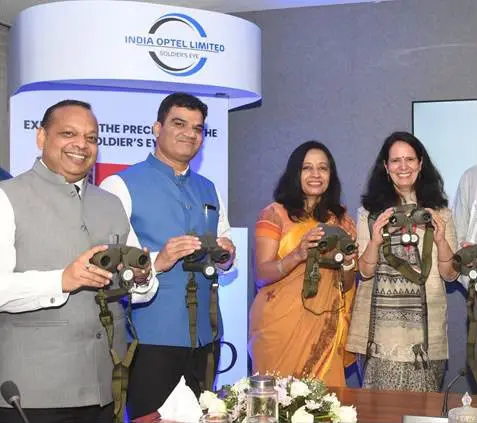
The seven successor companies span areas such as munitions and explosives, armoured and other vehicles, weapons and equipment, troop comfort items, opto-electronics, parachutes and ancillary products. Together they became a substantial addition to the ranks of the country's defence public sector undertakings, complementing established firms and broadening the base of defence manufacturing in India.
Products and Role
The successor DPSUs cover a wide swathe of land-warfare and general defence needs:
- Ammunition and explosives: small-arms ammunition, artillery shells, propellants and explosives.
- Vehicles: armoured fighting vehicles, specialist military vehicles and mine-protected vehicles.
- Weapons and equipment: guns, mortars and associated systems for the Army and other forces.
- Troop comfort and ancillaries: clothing, tentage, parachutes and opto-electronic devices.
These products complement those of the platform-oriented DPSUs. Ammunition and armament from the successor companies equip the same forces served by Hindustan Aeronautics Limited in the air and by the shipyards at sea, while their systems often incorporate electronics from Bharat Electronics Limited and technologies developed by the DRDO. The Indian Army in particular depends heavily on their output for its day-to-day operational needs.
Objectives and Challenges
The corporatisation was designed to transform a large, integrated production organisation into commercially oriented companies capable of modernising their facilities, improving product quality and expanding their customer base beyond the armed forces to include exports and civilian markets where appropriate. Greater autonomy was intended to let each company invest, innovate and respond to demand more quickly than the previous departmental structure allowed.
The transition has involved significant change management, including questions of workforce, legacy liabilities and order flows, and the new companies have had to build commercial capabilities while continuing to meet the ongoing needs of the services without disruption. The reform is broadly consistent with the wider policy direction of encouraging greater efficiency and self-reliance across the defence industrial base, alongside initiatives that draw private industry and start-ups into the sector.
As they establish themselves, the seven successor DPSUs remain central to India's land-warfare supply chain, providing the ammunition, weapons and vehicles on which the Army in particular depends. Their evolution from a departmental board into corporate entities represents one of the most significant structural reforms in the recent history of Indian defence production. In the years ahead, the ability of these companies to modernise their factories, raise quality, win fresh orders and secure export contracts will determine how fully the aims of the reform are realised, as they carry forward a legacy of supplying Indian forces for generations. The success of the restructuring will ultimately be measured by whether these companies can become efficient, innovative and export-capable while continuing to guarantee the supply of essential ammunition and equipment to the services. In that sense the seven successor DPSUs sit at the centre of both a historic industrial reform and the country's ongoing effort to build a modern, self-reliant defence manufacturing base.