
 INDIA DEFENCEDhruv NG Helicopter Explained: What HAL Has Actually Put Into Pawan Hans Service
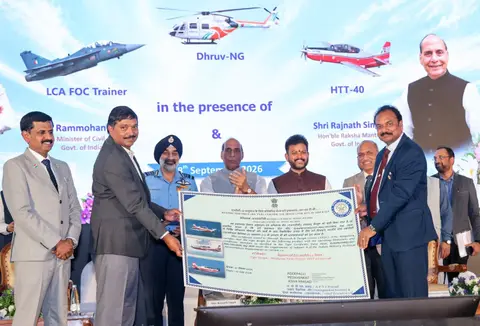 INDIA DEFENCELCA FOC Trainers Delivered With HTT 40 and Dhruv NG as Rajnath Singh Asks Engineers for Technologies That Do Not Exist
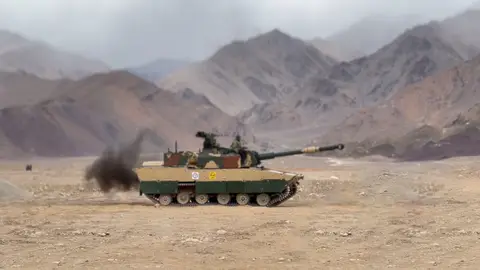 DEFENCE INDUSTRYTata Zorawar light tank clears Army's L1 hurdle for Rs 20,000 crore contract
 DEFENCE INDUSTRYIndia Belgium Defence Deals Sealed As PM De Wever Visits Delhi
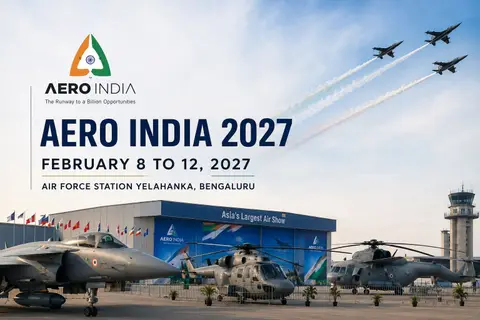 DEFENCE INDUSTRYAero India 2027 Dates Confirmed for February 8 to 12 in Bengaluru
Hindustan Aeronautics Limited (HAL) is India's largest aerospace and defence public sector undertaking and the country's principal manufacturer of military aircraft, helicopters, engines and avionics. Headquartered in Bengaluru, the company traces its origins to Hindustan Aircraft Limited, founded in 1940, and has grown into the central pillar of India's aviation industry, serving all three armed forces as well as the Coast Guard and civil operators.
History and Role
HAL played a formative role in building India's aeronautical capability, initially through licence production of foreign aircraft and later through indigenous design and development in partnership with the DRDO. As one of the country's leading defence public sector undertakings, it supplies the Indian Air Force, Army, Navy and Coast Guard, and also undertakes overhaul, upgrade and maintenance work for a wide range of platforms.
The company operates through several complexes and divisions spread across the country, organised broadly around fixed-wing aircraft, helicopters, engines, avionics and accessories. This structure allows HAL to combine airframe manufacture with in-house production of engines and systems, making it central to the ecosystem of military aircraft of India. Its research and design centres develop new platforms while its manufacturing divisions handle series production and licence assembly.
Products and Programmes
HAL's product range spans combat aircraft, trainers, transport aircraft and rotary-wing platforms. Among its best known programmes are the following:
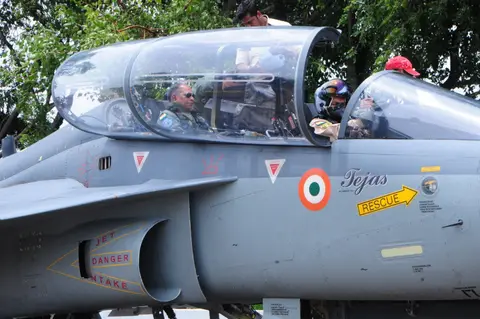
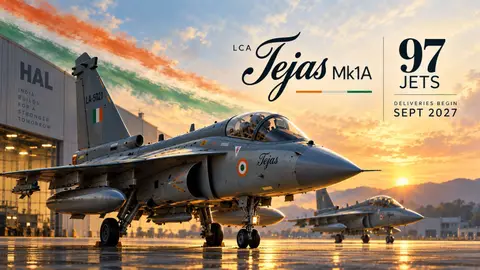
- Tejas Light Combat Aircraft: the indigenous single-engine multirole fighter, developed with DRDO and produced by HAL, with continued development in the Tejas Mk2.
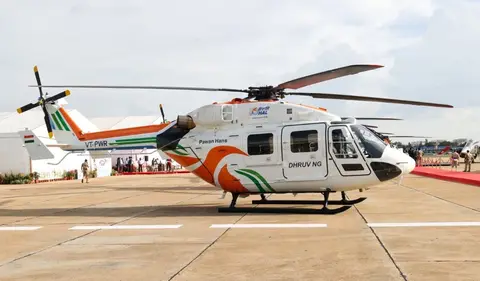
- Dhruv Advanced Light Helicopter: an indigenously designed multirole helicopter serving all three armed forces, from which armed and light utility variants have been derived.
- Su-30MKI: the heavy multirole fighter built under licence for the Indian Air Force, one of the mainstays of its combat fleet.
Beyond manufacturing, HAL carries out mid-life upgrades, structural repair and technology insertion for both indigenous and imported platforms, extending the service life of aircraft across the fleet. It also develops aero-engines and works on next-generation programmes intended to keep pace with evolving air power requirements, including advanced trainers, transport aircraft and future combat platforms.
Partnerships and Wider Ecosystem
HAL depends on a dense web of partners. Avionics, radars and electronic systems for many of its platforms are supplied by Bharat Electronics Limited, while air-to-air and other weapons integrated on its fighters come from Bharat Dynamics Limited. This collaboration ties HAL closely to the broader narrative of defence manufacturing in India and to the country's push for self-reliance.
As India pursues greater self-reliance in aerospace, HAL has expanded its engagement with private-sector suppliers and micro, small and medium enterprises, building a wider supplier base for components and sub-assemblies. The company is also increasingly involved in export efforts, seeking overseas customers for its aircraft, helicopters and services, and it participates prominently in international air shows and exhibitions such as Aero India held in Bengaluru.
With decades of experience in design, manufacture and maintenance, HAL remains the anchor of India's military aviation. Its ability to combine indigenous development with licence production, to manufacture engines and avionics in-house, and to support platforms across their full life cycle makes it indispensable to the armed forces. The company invests continuously in modernising its plants, training a skilled workforce and developing next-generation technologies so that it can meet future requirements at home while competing for orders abroad. As the demand for combat aircraft, helicopters and upgrades grows, and as the armed forces seek deeper indigenisation of their fleets, HAL's role in delivering home-grown air power continues to expand. Its long record of design, licence production and sustainment, combined with growing collaboration with the private sector, positions the company to remain the central engine of Indian military aviation for the foreseeable future, and to support the country's ambition of becoming a more capable and self-reliant aerospace producer on the world stage.