
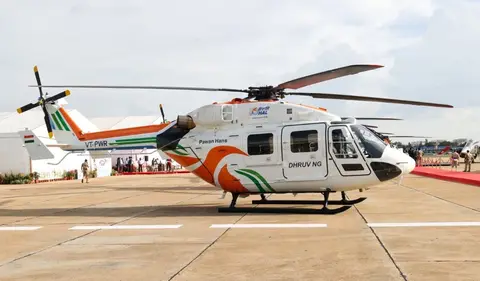
 INDIA DEFENCEDhruv NG Helicopter Explained: What HAL Has Actually Put Into Pawan Hans Service
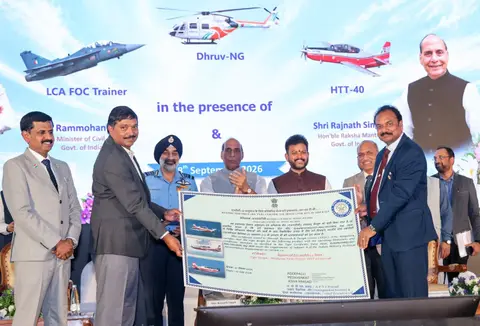 INDIA DEFENCELCA FOC Trainers Delivered With HTT 40 and Dhruv NG as Rajnath Singh Asks Engineers for Technologies That Do Not Exist
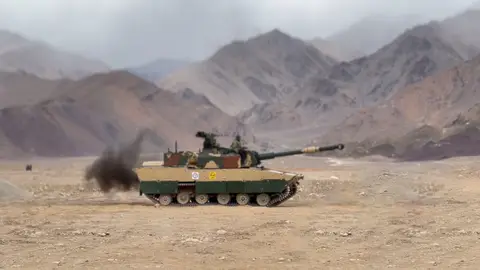 DEFENCE INDUSTRYTata Zorawar light tank clears Army's L1 hurdle for Rs 20,000 crore contract
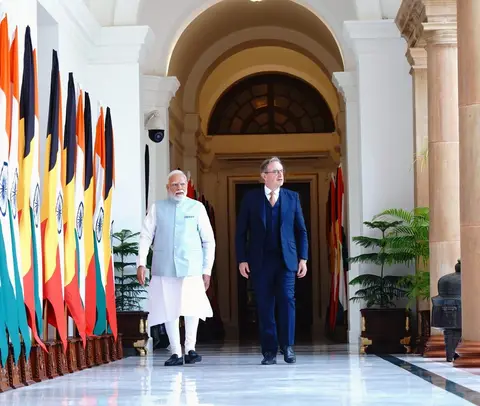 DEFENCE INDUSTRYIndia Belgium Defence Deals Sealed As PM De Wever Visits Delhi
 DEFENCE INDUSTRYAero India 2027 Dates Confirmed for February 8 to 12 in Bengaluru
Bharat Dynamics Limited (BDL) is the Indian defence public sector undertaking responsible for manufacturing guided missiles and allied systems. Established in 1970 and headquartered in Hyderabad, the company was set up specifically to give India an indigenous capacity to produce missiles, and it remains the principal production agency for the systems designed by the country's research establishments. Its creation marked an early and deliberate step towards building a sovereign missile industry within India.
Role and Partnership with DRDO
BDL's central role is to productionise the missiles developed by the DRDO. Under this arrangement, DRDO laboratories carry out design and development, and BDL industrialises the manufacture, assembly, integration and testing of the systems for the armed forces. As one of the specialised defence public sector undertakings, it occupies a distinctive niche as India's dedicated missile producer, complementing the platform-building work of other DPSUs.
The company operates several manufacturing units, each equipped for the precision engineering, propellant handling and system integration that missile production demands. This specialised infrastructure, together with stringent quality and safety requirements, makes BDL a critical node in the wider landscape of Indian defence manufacturing.
Products
BDL manufactures a range of missiles across categories, spanning surface-to-air, air-to-air and anti-tank roles, as well as launchers, countermeasures and related equipment. Its flagship products include:
- Akash: the medium-range surface-to-air Akash air defence missile system, produced for the Army and Air Force.
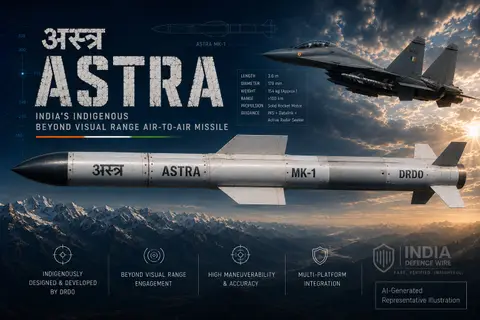
- Astra: the indigenous beyond-visual-range Astra air-to-air missile, integrated onto Indian fighter aircraft.
- Anti-tank and other systems: guided anti-tank missiles and additional systems produced under technology transfer and collaboration arrangements.
These products place BDL at the heart of the overview of missiles in India. Weapons such as Astra are integrated onto the fighters built by Hindustan Aeronautics Limited, while the electronics and seekers in many systems draw on components supplied by Bharat Electronics Limited, illustrating how closely the DPSUs work together to field complete weapon systems.
Exports and Self-Reliance
BDL has been positioned as a potential exporter of Indian missile systems, in line with the government's push to grow defence exports, subject to strategic and policy considerations. Its ability to manufacture complete systems domestically supports the broader objective of reducing import dependence for critical munitions, an area of particular sensitivity for national security.
The company continues to invest in expanding capacity and in developing a domestic vendor base for sub-systems and components, working with private industry and smaller suppliers to distribute manufacturing skills more widely. It also undertakes life-cycle support for the missiles it produces, including refurbishment and maintenance to keep stocks serviceable through their service life, and it supports the armed forces with spares and technical assistance.
As precision-guided weapons become increasingly decisive in modern conflict, BDL's importance to the armed forces has grown. By translating indigenous designs into series-produced missiles, by anchoring the missile supply chain within India, and by building the industrial depth needed to sustain production at scale, the company plays an essential part in equipping the services and in advancing the country's goal of self-reliance in defence. Sustained investment in capacity, quality systems and a broader vendor base will be central to meeting future requirements, particularly as the armed forces expand their inventories of guided weapons across multiple roles. Working alongside the DRDO on new designs and drawing private industry more deeply into its supply chain, BDL is well placed to remain the country's principal source of home-built missiles for years to come. Its role in reducing reliance on imports for some of the most sensitive categories of munitions gives it a strategic importance out of proportion to its size, and makes its continued modernisation a national priority as India strengthens its deterrent and conventional capabilities alike.