

 INDIA DEFENCEDhruv NG Helicopter Explained: What HAL Has Actually Put Into Pawan Hans Service
 INDIA DEFENCELCA FOC Trainers Delivered With HTT 40 and Dhruv NG as Rajnath Singh Asks Engineers for Technologies That Do Not Exist
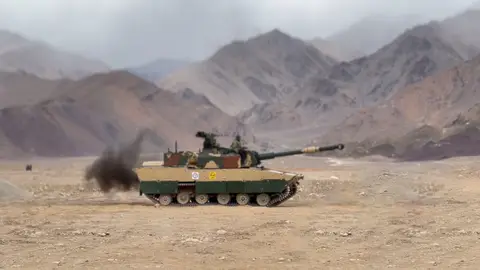 DEFENCE INDUSTRYTata Zorawar light tank clears Army's L1 hurdle for Rs 20,000 crore contract
 DEFENCE INDUSTRYIndia Belgium Defence Deals Sealed As PM De Wever Visits Delhi
 DEFENCE INDUSTRYAero India 2027 Dates Confirmed for February 8 to 12 in Bengaluru
The Advanced Towed Artillery Gun System, universally known as ATAGS, is a 155mm/52-calibre towed howitzer developed indigenously under the direction of DRDO in partnership with private industry. Conceived as a modern, long-range gun designed and built in India, ATAGS is among the most closely watched of the country's Indian artillery systems and is intended to become a mainstay towed gun of the Indian Army.
ATAGS emerged from the objective of creating a home-grown 155mm/52 gun to reduce dependence on imports and to give the Army a weapon tailored to Indian operating conditions. The programme has been executed with significant involvement from private-sector partners, making it a notable example of collaboration between government research and domestic industry. This partnership model was intended not only to deliver a gun but also to develop industrial capability that could be sustained over the long term, spreading design and production skills across more than one company and creating a base for future artillery projects.
Design and distinctive features
ATAGS is built around a 155mm/52-calibre barrel, the longer calibre length associated with extended range. The gun incorporates a number of modern features, including an all-electric drive for functions such as laying and ammunition handling, in place of the hydraulic systems common on older guns. It uses a larger chamber and is designed to achieve long reach with modern projectiles and charges. During trials the gun has demonstrated notably long ranges for its class, though precise figures depend on the ammunition and charge configuration and continue to be validated through testing.
Other design characteristics reported for ATAGS include a high-capacity ready magazine for rapid firing, an advanced fire-control and communication suite, and features intended to ease sustained operation by the crew. Its emphasis on range, rate of fire and automation reflects contemporary thinking on towed artillery, where the aim is to match much of the performance of self-propelled guns at lower cost and weight. The all-electric approach is intended to improve reliability and reduce maintenance compared with hydraulic systems that can be prone to leaks and failures in harsh conditions, an advantage in the extremes of heat, cold and dust found across India's operational theatres.
Trials, induction and role
ATAGS has undergone an extended programme of development and user trials across varied terrain and climatic conditions, a normal and necessary process for qualifying a new heavy gun. Induction into service has been planned following successful completion of trials and contracting, and the gun is expected to be procured in significant numbers to modernise the towed artillery fleet. As with any system still moving from development into series production, timelines and quantities should be treated as evolving rather than fixed. Series manufacture also depends on the wider defence manufacturing base being able to deliver guns at the required rate and quality.
In service, ATAGS is expected to operate alongside other 155mm guns, giving the Regiment of Artillery a spectrum of towed options for different theatres. Its standardisation on the 155mm calibre also makes it a candidate carrier for guided and extended-range rounds under development, allowing a single family of munitions to be shared across the fleet. The strategic importance of ATAGS lies in its indigenous character. As a gun conceived, designed and largely built within India, it offers control over the supply chain, the ability to tailor the design to national requirements, and a platform for continued improvement. If fielded at scale, ATAGS would mark a substantial step in the Army's long effort to rebuild and modernise its artillery through domestic capability rather than imports, and it may open opportunities in export markets as well. Continued investment in the programme is therefore viewed as much a matter of industrial self-reliance as of the gun's battlefield performance, since a sustained order book keeps the design teams, suppliers and production lines active for the projects that will follow it.