
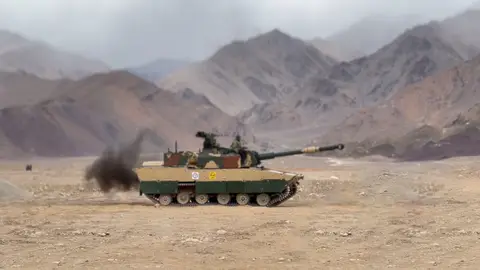
 DEFENCE INDUSTRYTata Zorawar light tank clears Army's L1 hurdle for Rs 20,000 crore contract
 DEFENCE INDUSTRYIndia Belgium Defence Deals Sealed As PM De Wever Visits Delhi
 DEFENCE INDUSTRYAero India 2027 Dates Confirmed for February 8 to 12 in Bengaluru
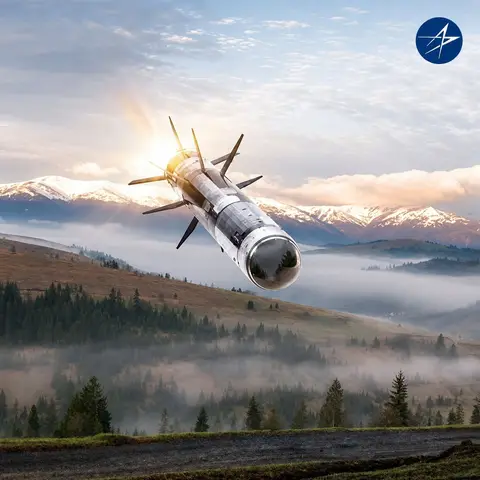 DEFENCE INDUSTRYJavelin missile co-production advances as Tata Advanced Systems signs Javelin Joint Venture pact
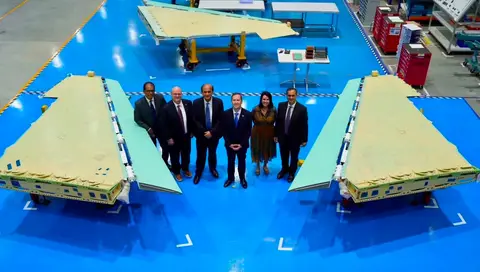 DEFENCE INDUSTRYTata Lockheed Martin MTA push gets a lift from US envoy's Hyderabad visit
Artillery forms the principal indirect-fire arm of the Indian Army, organised under the Regiment of Artillery. Its role spans destruction and neutralisation of enemy positions, counter-bombardment, and fire support to infantry and armoured formations across terrain ranging from the high Himalayas to the deserts of Rajasthan. For much of the 1990s and 2000s the arm relied heavily on ageing towed guns, with little fresh procurement following the 1980s Bofors FH-77B acquisition amid the political fallout of the Bofors scandal. That long gap has since closed, and the arm has entered a sustained modernisation phase built around indigenous design and licensed manufacture, spanning towed guns, tracked self-propelled howitzers and long-range rocket artillery.
Key facts
- Custodian: Regiment of Artillery, Indian Army
- Core calibre: Progressive standardisation on 155mm across towed and self-propelled guns
- Categories in service: Towed howitzers, tracked and wheeled self-propelled guns, multi-barrel rocket launchers, ultra-light and mountain guns
- Flagship indigenous platforms: Dhanush, ATAGS, Pinaka
- Licence-built/imported platforms: K9 Vajra-T (origin South Korea), M777 ultra-light howitzer (origin USA)
- Programme status: Multiple induction and procurement tracks running concurrently through the 2020s
Towed and self-propelled guns
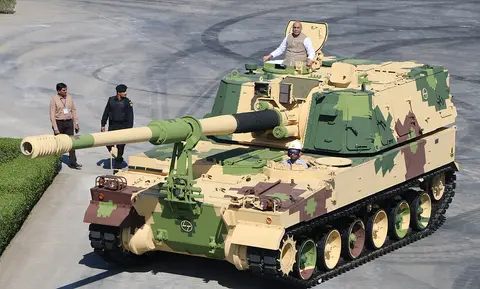
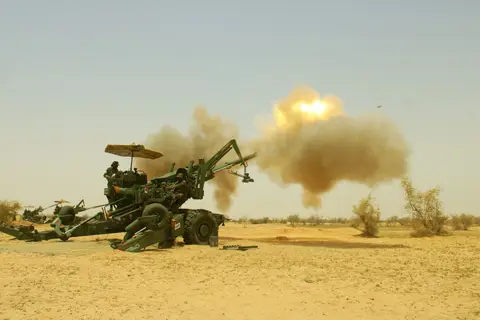
The towed gun fleet is anchored by the indigenous Dhanush, a 155mm derivative of the earlier Bofors design, alongside the more powerful indigenous Advanced Towed Artillery Gun System (ATAGS), a 155mm/52-calibre gun developed by DRDO with private-sector partners. The Army has also fielded the American-origin M777 ultra-light howitzer for rapid deployment in mountainous sectors. On the self-propelled side, the K9 Vajra-T tracked howitzer, built in India under a South Korean licence, equips regiments in the western desert sector, giving mechanised formations organic, mobile heavy fire support.
Rocket and missile systems
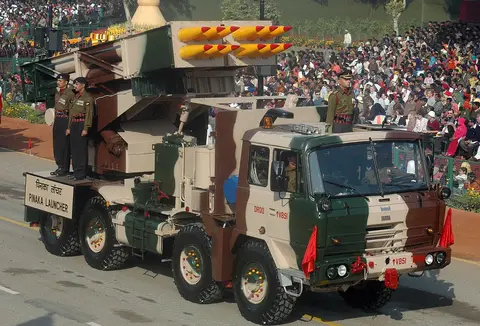
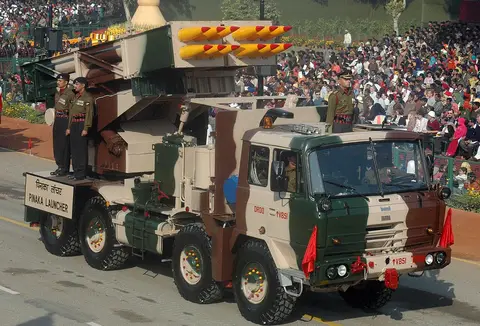
Multi-barrel rocket launchers add long-range area-saturation firepower beyond the reach of tube artillery. The indigenous Pinaka system, developed by DRDO, has progressively replaced older Soviet-origin systems and continues to be enhanced with extended-range and guided variants. These rocket regiments are typically grouped for concentrated fire in support of strike corps operations.
Modernisation programme
Artillery modernisation is guided by the long-standing Field Artillery Rationalisation Plan, which envisages a largely 155mm force. Current efforts include the phased procurement of roughly 1,200 towed gun systems, with an initial batch tendered under the indigenous design, development and manufacture route, and a separate order for several hundred ATAGS guns to arm additional regiments. Parallel efforts continue on wheeled self-propelled guns and further rocket-system upgrades.
Legacy Soviet-origin systems, such as the 130mm M-46 gun and BM-21 Grad rocket launcher, are being progressively retired or upgraded as replacements enter service, though some remain in reserve or second-line use pending full fleet turnover.
Together, these programmes mark a shift from import dependence toward a domestically manufactured artillery base, driven by DRDO design work and expanding private and public-sector production capacity, with private industry now manufacturing complete gun systems rather than components alone.