
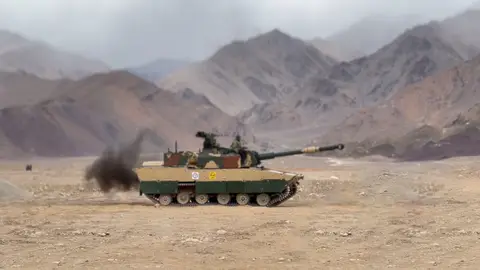
 DEFENCE INDUSTRYTata Zorawar light tank clears Army's L1 hurdle for Rs 20,000 crore contract
 DEFENCE INDUSTRYIndia Belgium Defence Deals Sealed As PM De Wever Visits Delhi
 DEFENCE INDUSTRYAero India 2027 Dates Confirmed for February 8 to 12 in Bengaluru
 DEFENCE INDUSTRYJavelin missile co-production advances as Tata Advanced Systems signs Javelin Joint Venture pact
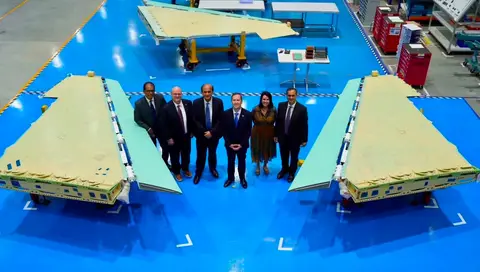 DEFENCE INDUSTRYTata Lockheed Martin MTA push gets a lift from US envoy's Hyderabad visit
The Dhanush is a 155mm towed howitzer developed in India as an indigenous derivative of the Bofors FH-77B gun that the Army acquired from Sweden in the 1980s. Often described as a homegrown descendant of the Bofors design, Dhanush was engineered to extend the older gun's range and modernise its fire-control systems while being manufactured largely with Indian components. It became the first artillery gun to be designed and produced within India to enter series production and induction, filling a long gap in fresh towed-gun acquisition that followed the political controversy surrounding the original Bofors deal. The gun is informally referred to by some observers as a "desi Bofors" in reference to its lineage.
Key facts
- Type: Towed medium howitzer
- Origin: India; derived from the Bofors FH-77B design
- Manufacturer: Gun Carriage Factory, Jabalpur, under the erstwhile Ordnance Factory Board, now part of Advanced Weapons and Equipment India Limited
- Calibre: 155mm, originally 45-calibre, with an upgraded 52-calibre version also developed
- Range: Over 36 km with the 45-calibre gun; up to about 42 km with the upgraded 52-calibre version
- Indigenous content: Reported at over 80 percent
- Status: In service with the Indian Army; induction ongoing
Development
Design work on Dhanush began at the Gun Carriage Factory in Jabalpur, building on decades of familiarity with the Bofors FH-77B gained through licensed production of ammunition and spares for the original imported guns. Engineers extended the barrel and reworked the carriage, sighting and recoil systems to improve range and accuracy, while retaining the 155mm calibre. The gun completed extensive user and confirmatory trials through the 2010s before the government cleared an order for 114 guns, with the first six guns formally inducted into the Army in April 2019 in a ceremony at the Gun Carriage Factory. Subsequent production faced quality and reliability setbacks, including issues with bearing components and the recoil system identified during trials, which slowed the induction pace for a period before corrective measures allowed deliveries to resume and further regiments to be raised. In 2021, the Gun Carriage Factory and its parent Ordnance Factory Board were reorganised, with production of Dhanush transferring to Advanced Weapons and Equipment India Limited, one of seven new defence public-sector undertakings created from the erstwhile Ordnance Factory Board.
Capabilities
Dhanush fires standard and extended-range 155mm ammunition using a bi-modular and bag-charge system, and offers three rates of fire: a burst rate of three rounds in 30 seconds, an intense rate of 12 rounds in three minutes, and a sustained rate of 42 rounds over an hour. It carries a double-baffle muzzle brake to manage recoil and is fitted with a unified day/night sighting system for engaging both static and moving targets. A later 52-calibre upgrade further increased its maximum range, bringing its performance closer to newer-generation 155mm guns while retaining a largely indigenous production base. The gun's carriage allows it to be towed by a medium vehicle and brought into action relatively quickly, and its indigenous sighting and fire-control package was designed to reduce dependence on imported electronics.
Service
Dhanush guns have been progressively formed into artillery regiments, with the Army raising successive regiments as production allows, alongside continued efforts to resolve quality issues flagged during earlier trials. As one of the few towed howitzers designed and built substantially in India, Dhanush occupies an important place in the Army's shift toward indigenous artillery, complementing the more powerful Advanced Towed Artillery Gun System and the self-propelled K9 Vajra-T as the mainstay of the modernised gun fleet. Guns delivered so far have been used to raise multiple regiments, with further batches expected as production stabilises, and the type is regarded within the Army as a proving ground for fully indigenous towed-gun manufacture ahead of larger orders such as the planned Towed Gun System project.