
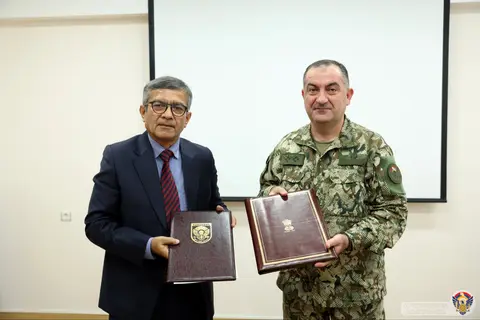
 DEFENCE INDUSTRYBrahMos export orders: Vietnam deal worth about $100 million, Indonesia $200 million as Akash reaches Tajikistan, Turkmenistan
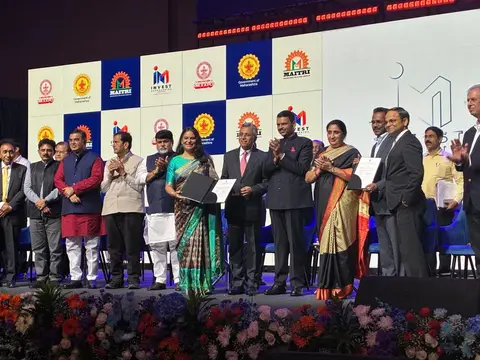 DEFENCE INDUSTRYMahindra Embraer Nagpur facility to assemble C-390 if IAF picks the aircraft
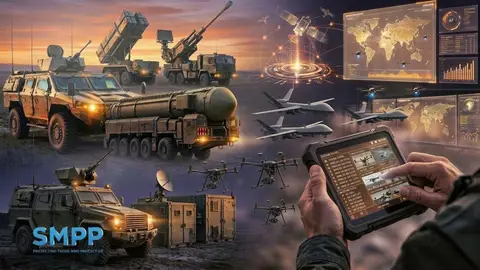 DEFENCE INDUSTRYSMPP Drone Manufacturing Push: Firm Shifts From Ammunition to Unmanned Warfare, Targets Integrated Defence Capabilities
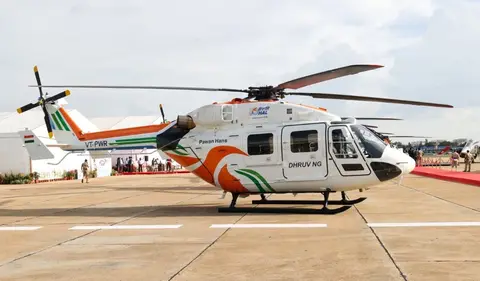 INDIA DEFENCEDhruv NG Helicopter Explained: What HAL Has Actually Put Into Pawan Hans Service
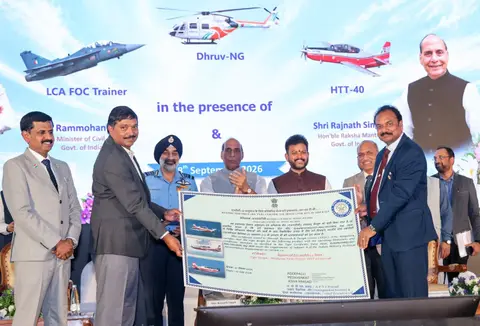 INDIA DEFENCELCA FOC Trainers Delivered With HTT 40 and Dhruv NG as Rajnath Singh Asks Engineers for Technologies That Do Not Exist
The Twin Engine Deck Based Fighter (TEDBF) is a planned indigenous naval fighter intended to operate from the aircraft carriers of the Indian Navy. Designed as a twin-engine, carrier-capable multirole aircraft, it is envisioned as a future replacement for the Navy's current carrier fighter and represents an ambitious step toward indigenous naval aviation. It sits within the future-programme portion of the Military Aircraft of India.
Carrier-based fighters face demanding requirements: they must withstand the stresses of ski-jump launches and arrested landings, tolerate a corrosive maritime environment, and fold their wings to fit in confined hangars and lifts. They also need robust structures, reliable engines and precise low-speed handling for deck recovery. Developing such an aircraft indigenously is a significant engineering challenge, and the TEDBF is being pursued to build this capability at home rather than rely wholly on imports.
Design intent
The TEDBF is planned as a twin-engine fighter to provide the power and redundancy valued in naval operations, where an engine failure over the sea leaves little margin. Reported design goals include carrier compatibility, folding wings, a modern sensor suite and a multirole capability spanning air defence, anti-ship and strike missions. As an indigenous programme, it is expected to draw on DRDO design agencies with HAL in a manufacturing role, building on experience from earlier indigenous fighter efforts and the naval operating knowledge accumulated with existing carrier aircraft.
Its planned systems are expected to include an indigenous active electronically scanned radar and indigenous weapons such as the Astra beyond-visual-range missile, aligning the naval fighter with the wider indigenous weapons ecosystem. This commonality with land-based indigenous fighters could ease sustainment, reduce cost and simplify training across platforms, spreading the benefits of domestic development.
Naval fighters must also balance competing demands more sharply than land-based types. They need enough range and payload to be useful at sea, yet must remain compact and strong enough for carrier operations. Meeting these requirements calls for close attention to structure, undercarriage, aerodynamics and materials, as well as extensive testing both ashore and at sea before the aircraft can be cleared for carrier use. The TEDBF programme is expected to build this specialised testing and qualification expertise within India, capability that has value beyond any single aircraft.
Status and outlook
The TEDBF is firmly a programme in the planning and development stage. Public reporting has described conceptual work, approvals and projected milestones such as prototype construction and first flight, but these are planned and provisional, and readers should treat any specific dates, figures or timelines with caution. It is intended to succeed the current carrier fighter, the MiG-29K, over the longer term as that type ages.
- Type: twin-engine carrier-based multirole fighter (planned)
- Intended operator: Indian Navy
- Lead agencies: DRDO with HAL manufacturing role
- Status: under development; timelines provisional
If realised, the TEDBF would give India a home-built carrier fighter and a substantial boost to indigenous naval aviation, complementing land-based indigenous programmes and deepening the country's aerospace industrial base. Its success would depend on mastering the unique demands of carrier operations alongside the broader challenges of fighter development, from engine performance to structural strength and systems integration. As a long-horizon effort, it reflects the Navy's ambition to field capable, indigenous aircraft from its carriers and to reduce dependence on imported naval fighters in the decades ahead, aligning naval aviation with India's wider drive for self-reliance in defence. If the programme matures as planned, it would place India among the few nations able to design and build carrier fighters, a demanding niche that reflects the depth of a country's aerospace and naval expertise and its confidence in its own industrial base.