
 DEFENCE INDUSTRYBrahMos export orders: Vietnam deal worth about $100 million, Indonesia $200 million as Akash reaches Tajikistan, Turkmenistan
 DEFENCE INDUSTRYMahindra Embraer Nagpur facility to assemble C-390 if IAF picks the aircraft
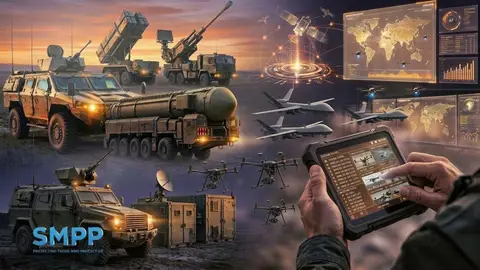 DEFENCE INDUSTRYSMPP Drone Manufacturing Push: Firm Shifts From Ammunition to Unmanned Warfare, Targets Integrated Defence Capabilities
 INDIA DEFENCEDhruv NG Helicopter Explained: What HAL Has Actually Put Into Pawan Hans Service
 INDIA DEFENCELCA FOC Trainers Delivered With HTT 40 and Dhruv NG as Rajnath Singh Asks Engineers for Technologies That Do Not Exist
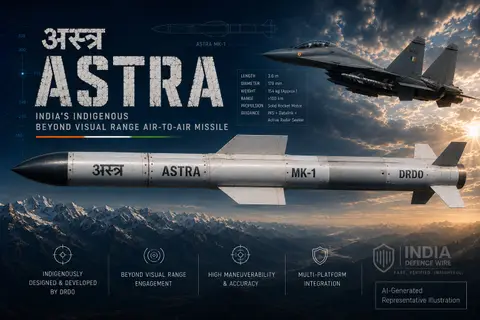
Astra is India's indigenous beyond-visual-range (BVR) air-to-air missile, developed by the Defence Research and Development Organisation (DRDO) to give fighter aircraft the ability to engage aerial targets at long distances before they close to within visual range. It represents a significant step in reducing India's reliance on imported air combat weapons and is a key entry in the family of missiles in India.
Beyond-visual-range combat
A BVR missile like Astra allows a pilot to detect, track and launch against an enemy aircraft from tens of kilometres away, using the launching fighter's radar together with the missile's own guidance. In a typical engagement the missile is guided by mid-course updates from the aircraft before its active radar seeker takes over in the terminal phase, homing autonomously onto the target. This lets the launching pilot manoeuvre or engage other threats rather than continuously illuminating the target.
Astra is a solid-fuelled missile designed for high-speed intercepts and is intended to be a primary air-dominance weapon for the Indian Air Force. Mastering BVR technology has been an important goal for India, since such weapons are central to modern air combat and had previously been available only through foreign purchase.
In air combat, the side able to detect and shoot first at long range often holds a decisive advantage, forcing opposing aircraft onto the defensive before they can bring their own weapons to bear. An indigenous BVR missile also insulates the air force from the supply constraints and end-use restrictions that can accompany imported munitions, giving planners greater freedom to hold and use stocks as they see fit. This strategic independence, as much as the raw performance of the weapon, has driven the emphasis placed on the Astra programme.
Carriage and integration
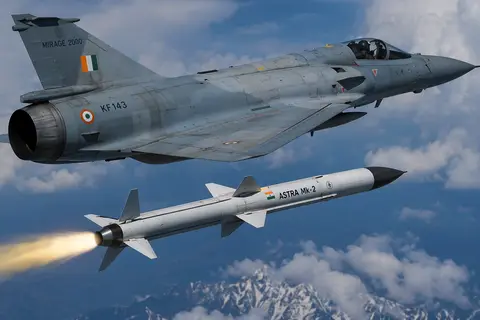
The missile has been integrated principally with the Su-30MKI, the service's heavy multirole fighter, which can carry several rounds and exploit its powerful radar for long-range detection. Integration with the indigenous Tejas family has also been widely reported, pairing an indigenous missile with an indigenous platform. This combination is central to India's push for self-reliant air power, described more fully in the overview of military aircraft in India.
Variants in development
DRDO has reported successive versions of the missile. The baseline Astra Mk1 has been inducted, while Astra Mk2 is described as a longer-ranged development with improved propulsion and guidance. A further variant, Astra Mk3, is reported to use an advanced propulsion concept intended to extend reach and no-escape performance considerably. As with most weapons in testing, precise ranges are generally stated in broad terms. Production of the missiles has been associated with Bharat Dynamics Limited (BDL), reflecting the involvement of India's established missile-manufacturing base.
- Type: Beyond-visual-range air-to-air missile
- Guidance: Mid-course update with active radar terminal seeker
- Platforms: Su-30MKI, with Tejas integration reported
- Variants: Mk1 inducted, Mk2 and Mk3 in development
Significance
Astra has been widely reported as a major achievement for India's guided-weapons effort, delivering a modern air-to-air capability that had previously depended almost entirely on foreign suppliers. Its induction gives Indian fighters a homegrown option for air dominance and creates a foundation for future variants with greater range and sophistication. Within the wider family of missiles in India, Astra complements surface-based systems such as Akash by extending indigenous capability into the air-to-air domain, strengthening the overall coherence of the country's defence ecosystem. As the missile is fielded across more platforms and its longer-ranged variants mature, it is expected to become the standard air combat weapon of the Indian fighter fleet, replacing imported missiles in the primary role. Continued development of the Astra line is therefore closely linked to the wider modernisation of India's combat aircraft and their sensors.