
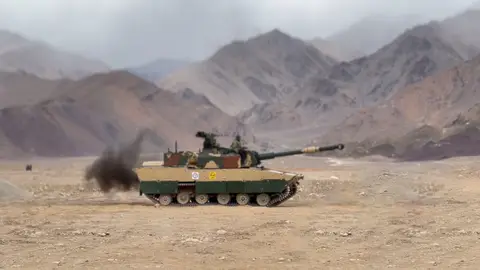
 DEFENCE INDUSTRYTata Zorawar light tank clears Army's L1 hurdle for Rs 20,000 crore contract
 DEFENCE INDUSTRYIndia Belgium Defence Deals Sealed As PM De Wever Visits Delhi
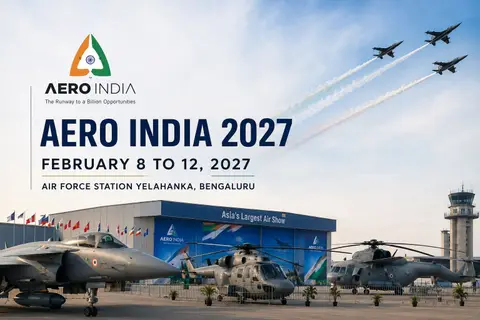 DEFENCE INDUSTRYAero India 2027 Dates Confirmed for February 8 to 12 in Bengaluru
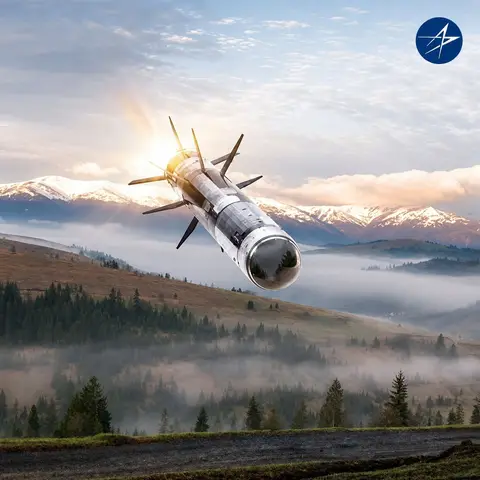 DEFENCE INDUSTRYJavelin missile co-production advances as Tata Advanced Systems signs Javelin Joint Venture pact
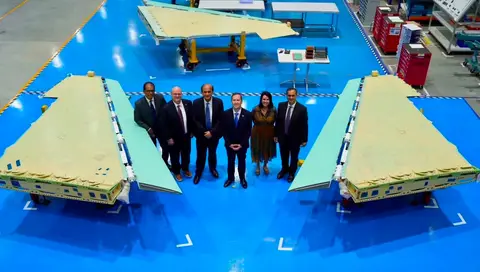 DEFENCE INDUSTRYTata Lockheed Martin MTA push gets a lift from US envoy's Hyderabad visit
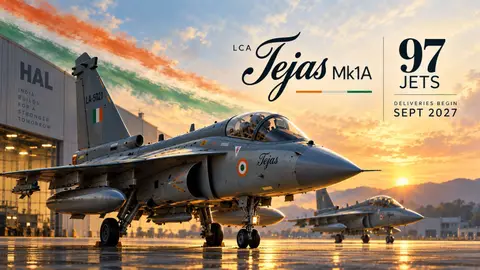
The HAL Tejas is a single-engine, tailless delta-wing light combat aircraft (LCA) designed and built by Hindustan Aeronautics Limited (HAL) under the Aeronautical Development Agency (ADA), India's premier military aircraft design organisation. Conceived to replace the Indian Air Force's (IAF) ageing MiG-21 fleet, the Tejas is the centrepiece of India's effort to build an indigenous fighter design and manufacturing base.
Key facts
- Role: Single-engine, multirole light combat aircraft
- Origin/Manufacturer: Hindustan Aeronautics Limited (HAL) / ADA, India
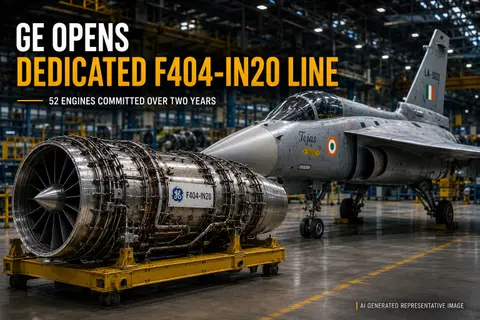
- Engine: General Electric F404-IN20 (Mk1/Mk1A); GE F414 planned for Mk2
- Top speed: Approximately Mach 1.6 to Mach 1.8
- Range: Around 3,000 km ferry range with external fuel tanks
- Armament: Astra beyond-visual-range air-to-air missile, R-73 close-combat missile, precision-guided bombs, anti-ship and air-to-ground weapons
- In service/on order: 40 Tejas Mk1; 83 Tejas Mk1A ordered in 2021 plus a further 97 ordered in 2025
Variants
The initial Tejas Mk1 comprises 40 aircraft, including Initial and Final Operational Clearance single-seaters and twin-seat trainers, delivered to IAF squadrons. The Tejas Mk1A is an upgraded variant with an AESA radar, an integrated electronic warfare suite, aerial refuelling capability and improved maintainability, ordered in two batches of 83 and 97 aircraft. A larger, more powerful Tejas Mk2, also referred to as the Medium Weight Fighter, is under development, featuring an elongated airframe, close-coupled canards, a more powerful engine and a substantially heavier weapons and fuel load. A navalised Tejas variant has also been flight-tested for carrier-compatible operations, including arrested landings ashore. The Tejas Mk2 prototype rolled out in 2025, with its maiden flight expected during 2026 and induction targeted from around 2029, once flight testing and certification are complete.
Indigenous Content and Development
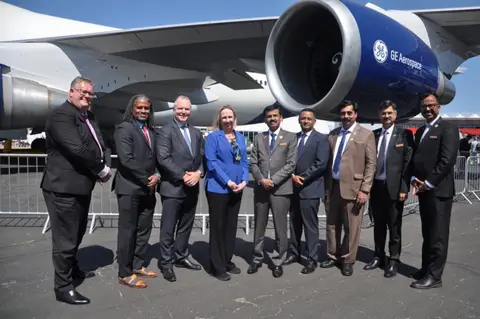
The Tejas programme has steadily increased its indigenous content, with the Mk1A estimated at around 60 percent by value, expected to rise further with subsequent orders as more systems, including radar, mission computers and electronic warfare equipment, are sourced domestically. The Tejas Mk2 is targeted at a substantially higher indigenous content, expected to increase further once its engine is licence-manufactured in India. The programme has also faced recurring delays tied to the supply of imported F404 engines from GE Aerospace, prompting a dedicated engine-supply agreement intended to stabilise the Mk1A production line. HAL has also expanded Tejas Mk1A production capacity by adding a second final assembly line at its Nashik division alongside the existing Bengaluru facility, targeting a combined output of around two dozen aircraft a year once fully ramped up.
Induction and Squadron Service
The Tejas Mk1 equips IAF squadrons including No. 45 Squadron, the “Flying Daggers”, and No. 18 Squadron, the “Flying Bullets”, based at Sulur Air Force Station. Deliveries of the Tejas Mk1A, manufactured at HAL's Nashik and Bengaluru facilities, have been ramping up, with the type intended to eventually equip a large share of the IAF's planned fighter squadron strength. The IAF has indicated an eventual requirement running into several hundred Tejas aircraft across variants, replacing retiring MiG-21, MiG-27 and Jaguar-era types over the coming decade.
Capabilities
Designed as an agile, lightweight multirole fighter, the Tejas is optimised for air defence and close air support roles, with a digital fly-by-wire flight control system, quadruplex redundancy and a glass cockpit. Its compact size and relaxed static stability give it high manoeuvrability, while progressive upgrades to radar, electronic warfare and weapons integration are intended to bring it closer to contemporary 4.5-generation standards.
As the most visible product of India's indigenous combat aircraft industry, the Tejas programme underpins HAL's production capacity and feeds directly into the development of the more ambitious Tejas Mk2 and the fifth-generation Advanced Medium Combat Aircraft (AMCA).