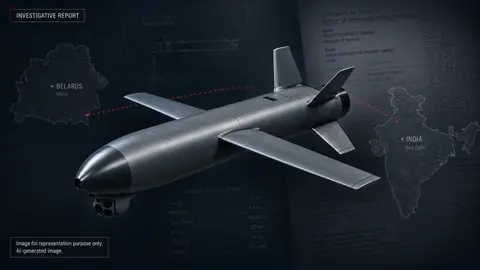

 DEFENCE INDUSTRYBrahMos export orders: Vietnam deal worth about $100 million, Indonesia $200 million as Akash reaches Tajikistan, Turkmenistan
 DEFENCE INDUSTRYMahindra Embraer Nagpur facility to assemble C-390 if IAF picks the aircraft
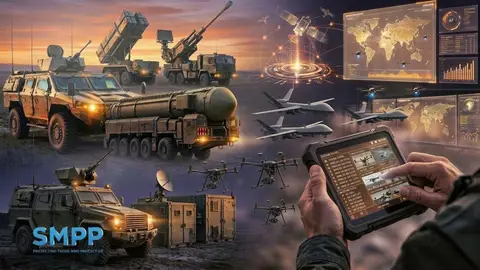 DEFENCE INDUSTRYSMPP Drone Manufacturing Push: Firm Shifts From Ammunition to Unmanned Warfare, Targets Integrated Defence Capabilities
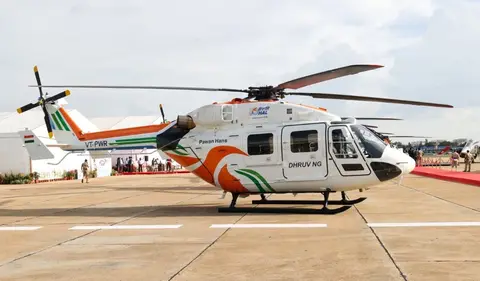 INDIA DEFENCEDhruv NG Helicopter Explained: What HAL Has Actually Put Into Pawan Hans Service
 INDIA DEFENCELCA FOC Trainers Delivered With HTT 40 and Dhruv NG as Rajnath Singh Asks Engineers for Technologies That Do Not Exist
The HAL Prachand is India's indigenous Light Combat Helicopter (LCH), a dedicated attack rotorcraft developed by HAL. Designed with an emphasis on high-altitude performance, it is a purpose-built armed helicopter that adds indigenous firepower to India's rotary-wing fleet. It is a notable entry among the Military Aircraft of India and one of the few attack helicopters designed specifically with mountain warfare in mind.
The Prachand was developed to meet a requirement for an attack helicopter capable of operating in the demanding conditions of India's mountainous and high-altitude regions, where thin air sharply reduces helicopter performance and payload. Meeting this requirement drove much of the design, including careful attention to weight, engine performance and rotor efficiency. It shares design lineage and technologies with the Advanced Light Helicopter family, including the Dhruv and Rudra, benefiting from the experience and proven components accumulated in those programmes.
Design and armament
The Prachand features a narrow tandem-seat configuration typical of dedicated attack helicopters, with the crew seated in line to reduce frontal area and improve survivability. It incorporates a stealth-conscious design, armour protection for the crew and vital systems, and a sensor and targeting suite for day and night operations. Its reported armament includes a nose-mounted cannon, rockets and guided missiles, enabling it to engage a variety of ground targets and, potentially, slow-moving aerial threats.
A distinguishing feature is its ability to operate at high altitude while still carrying meaningful weapons and fuel, a capability that has particular relevance for India's border regions where conventional attack helicopters can struggle. Mission sensors, avionics and electronic systems for such platforms often involve Indian industry, including firms such as BEL, reinforcing the indigenous supply chain and spreading advanced capability across domestic firms.
Attack helicopters like the Prachand are valued for their ability to provide close support to ground forces, to scout ahead of advancing troops and to engage armour and fortified positions. Doing so effectively requires a careful balance of firepower, protection and agility, all of which are harder to achieve at high altitude. The Prachand's design choices, from its slim profile to its powerful engines and integrated sensors, reflect an effort to strike this balance for the specific conditions India faces. Its crews can operate at night and in poor weather, extending the times at which the helicopter can be brought to bear.
Service and significance
The Prachand has entered service with India's armed forces, giving both the army and air force a dedicated, home-built attack helicopter. Its induction marked an important milestone for indigenous rotary-wing capability, demonstrating that India can design and field a specialised combat helicopter suited to its unique operating environment rather than adapting an imported type. Development and induction were supported by design agencies within DRDO for associated systems and technologies.
- Type: dedicated Light Combat Helicopter
- Manufacturer: HAL
- Key trait: high-altitude attack capability
- Status: in service
The Prachand illustrates the growing maturity of India's helicopter industry, complementing utility and armed variants with a purpose-built attack platform tailored to national needs. By addressing the specific challenge of high-altitude warfare with an indigenous solution, it reduces reliance on imported attack helicopters for those roles and gives commanders a capable, sovereign option. As production continues and additional units enter service, the Prachand is expected to become an increasingly important element of India's combat rotary-wing capability, working alongside other indigenous rotorcraft and forming part of a broader ecosystem of home-built military aircraft that supports self-reliance in defence. As crews accumulate experience and the design is refined through service, the Prachand is likely to see incremental improvements in sensors, weapons and reliability over time, keeping it effective in the specialised role for which it was created.