
 DEFENCE INDUSTRYBrahMos export orders: Vietnam deal worth about $100 million, Indonesia $200 million as Akash reaches Tajikistan, Turkmenistan
 DEFENCE INDUSTRYMahindra Embraer Nagpur facility to assemble C-390 if IAF picks the aircraft
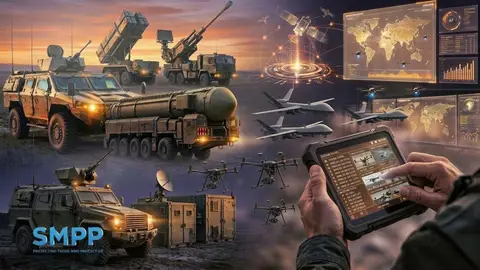 DEFENCE INDUSTRYSMPP Drone Manufacturing Push: Firm Shifts From Ammunition to Unmanned Warfare, Targets Integrated Defence Capabilities
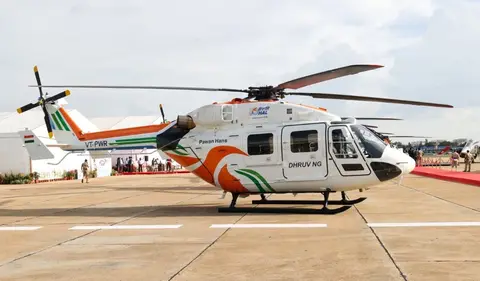 INDIA DEFENCEDhruv NG Helicopter Explained: What HAL Has Actually Put Into Pawan Hans Service
 INDIA DEFENCELCA FOC Trainers Delivered With HTT 40 and Dhruv NG as Rajnath Singh Asks Engineers for Technologies That Do Not Exist
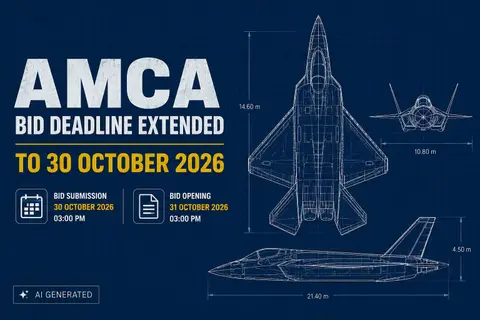
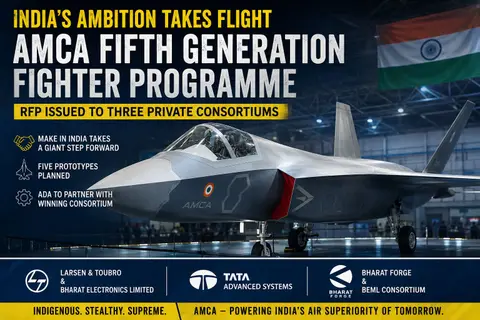
The Advanced Medium Combat Aircraft (AMCA) is India's fifth-generation stealth fighter programme, envisioned as a twin-engine, low-observable multirole aircraft for the Indian Air Force. It represents the most ambitious indigenous fighter effort undertaken in the country, aiming to place India among the small group of nations that design and build stealth combat aircraft. As such, it is intended to be the technological apex of India's combat aviation programmes.
The programme is led by DRDO through its aeronautics agency, with HAL expected to play a central manufacturing role. It is positioned as the apex of the indigenous fixed-wing family described in Military Aircraft of India, building on the experience gained from the Tejas and the planned Tejas Mk2. Lessons in design, materials and systems integration from those programmes are expected to feed directly into the more demanding stealth aircraft.
Design goals
The AMCA is planned as a stealth-optimised aircraft, with a shaped airframe, internal weapons carriage and reduced radar and infrared signature intended to improve survivability against modern air defences. Reported design features include an internal weapons bay for a clean low-observable configuration, supercruise ambitions and advanced sensor fusion that combines data from multiple sources into a single picture for the pilot. Development is often discussed in phases, with an initial configuration expected to use an available engine and later variants planned around a more powerful engine, potentially co-developed with a foreign partner.
Avionics plans centre on an indigenous active electronically scanned array radar, and the aircraft is expected to draw on work such as the Uttam AESA radar. Its intended weapons suite includes indigenous air-to-air missiles such as the Astra, carried internally to preserve stealth, alongside precision strike weapons. Stealth also demands advances in manufacturing, including special materials and coatings and precise structural tolerances, all of which build new capabilities in Indian industry.
Beyond the airframe and sensors, a fifth-generation fighter depends heavily on software, data links and mission systems that fuse information and present it clearly to the pilot. Developing these elements indigenously is as important as the hardware, since it allows India to modify and upgrade the aircraft freely over its life without depending on external approvals. The programme is therefore as much about mastering integration, testing and software as it is about building a stealthy shape.
Status and outlook
The AMCA is firmly a programme under development. It has received formal approval to proceed with development, and reporting has described plans for prototype construction and first flight, but these milestones remain planned and are subject to change. Readers should treat any specific dates, performance figures or production numbers as provisional pending official confirmation. The programme is also expected to involve private industry alongside public-sector agencies, broadening the domestic aerospace base.
The significance of the AMCA lies in its combination of stealth, sensor fusion and indigenous content. If realised, it would give India a home-built platform capable of operating in contested airspace and would substantially deepen the domestic aerospace industrial base across materials, propulsion, avionics and systems integration. It is intended to complement, rather than immediately replace, existing fighters, and to work alongside indigenous types across the force.
- Class: fifth-generation stealth multirole fighter (planned)
- Configuration: twin-engine with internal weapons bay (planned)
- Lead agencies: DRDO with HAL manufacturing role
- Status: under development; timelines provisional
As a long-horizon effort, the AMCA will be judged over many years. Its challenges include engine development, stealth manufacturing and systems integration at scale, each of which is technically demanding in its own right. Success would mark a major advance for Indian aerospace, signalling the maturation of a domestic capability to design and field an advanced combat aircraft largely on its own terms, and providing a foundation for future generations of Indian combat aircraft.