
 INDIA DEFENCEDhruv NG Helicopter Explained: What HAL Has Actually Put Into Pawan Hans Service
 INDIA DEFENCELCA FOC Trainers Delivered With HTT 40 and Dhruv NG as Rajnath Singh Asks Engineers for Technologies That Do Not Exist
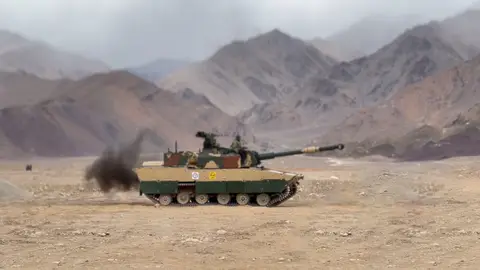 DEFENCE INDUSTRYTata Zorawar light tank clears Army's L1 hurdle for Rs 20,000 crore contract
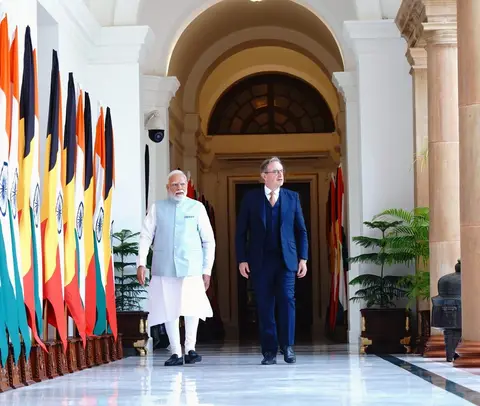 DEFENCE INDUSTRYIndia Belgium Defence Deals Sealed As PM De Wever Visits Delhi
 DEFENCE INDUSTRYAero India 2027 Dates Confirmed for February 8 to 12 in Bengaluru
The Chief of Defence Staff is the apex uniformed appointment in the Indian Armed Forces, created in 2019 to provide single-point military advice to the government and to drive greater coordination among the three services. The establishment of the post marked one of the most significant reforms of India's higher defence organisation since independence, addressing a long-standing gap in the structure that connects the political leadership to the military.
The idea of such an office had been recommended by various committees and reviews over the years, particularly after conflicts that highlighted the need for closer coordination between the Indian Army, the Indian Navy and the Indian Air Force. The government announced the creation of the post in 2019, and the first Chief of Defence Staff assumed office that year, bringing the recommendation into effect after decades of study.
Role and mandate
The Chief of Defence Staff wears several hats. He acts as the principal military adviser to the Defence Minister on tri-service matters, while the individual service chiefs continue to advise on matters concerning their own services. He also heads the newly created Department of Military Affairs within the Ministry of Defence, giving the military a direct role in the administration of defence in a way that had not previously existed. This dual civilian and uniformed capacity is one of the distinctive features of the post.
Among the responsibilities associated with the post are the promotion of jointness in procurement, training and staffing; the administration of tri-service organisations and agencies; and, importantly, the facilitation of the reorganisation of the services into joint structures. The Chief of Defence Staff also serves as the Permanent Chairman of the Chiefs of Staff Committee, the body through which the three service chiefs coordinate, a role that had previously rotated among the chiefs.
- Single-point military adviser to the government on tri-service issues.
- Head of the Department of Military Affairs in the Ministry of Defence.
- Permanent Chairman of the Chiefs of Staff Committee.
- Driver of jointness and of the move towards joint commands.
Jointness and theatre commands
A defining task associated with the office is advancing the ongoing reform towards integrated theatre commands. Much of the detailed planning for reorganising the services into joint theatre structures has been driven from the office of the Chief of Defence Staff, working with the service headquarters. This reform remains a work in progress, and its detailed shape continues to be developed, with the number and design of the commands still under discussion.
It is worth being precise about the limits of the post's authority. The Chief of Defence Staff does not exercise direct operational command over the forces of the individual services; operational command continues to run through the service chiefs and their commands. The role is instead one of coordination, advice and reform, intended to knit the three services more closely together over time rather than to supplant the existing chains of command.
The creation of the post built on India's existing experience of joint structures, such as the tri-service Strategic Forces Command and the Andaman and Nicobar Command. As the reform agenda advances, the office is expected to remain central to how India organises the higher direction of its armed forces, balancing the autonomy of the services against the demands of modern, multi-domain warfare that requires land, sea and air power to be employed as a single, coordinated whole. The success of the post will be measured in large part by how far it can foster genuine jointness in doctrine, procurement and operations, areas in which the three services have historically planned and trained separately. In this sense the Chief of Defence Staff is as much an agent of institutional change as a source of military advice, and the office is likely to evolve as the reforms it oversees take shape.