
 DEFENCE INDUSTRYTata Zorawar light tank clears Army's L1 hurdle for Rs 20,000 crore contract
 DEFENCE INDUSTRYIndia Belgium Defence Deals Sealed As PM De Wever Visits Delhi
 DEFENCE INDUSTRYAero India 2027 Dates Confirmed for February 8 to 12 in Bengaluru
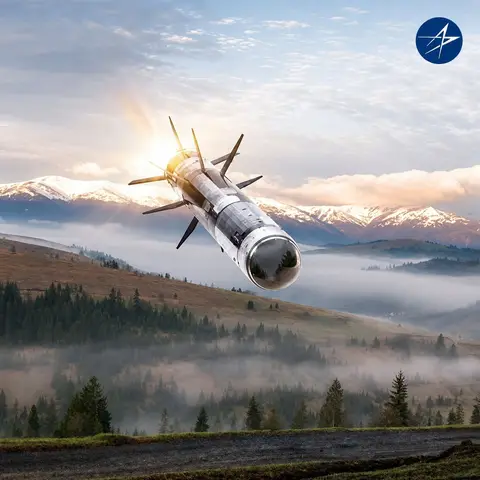 DEFENCE INDUSTRYJavelin missile co-production advances as Tata Advanced Systems signs Javelin Joint Venture pact
 DEFENCE INDUSTRYTata Lockheed Martin MTA push gets a lift from US envoy's Hyderabad visit
The Indian Coast Guard (ICG) is the maritime armed force of the Republic of India, responsible for enforcing law in India's territorial waters and exclusive economic zone, protecting the coastline, and conducting search-and-rescue operations at sea. Formally constituted by the Coast Guard Act, 1978, it functions under the Ministry of Defence and works closely with the Indian Navy, Customs and state marine police forces.
Key facts
- Formed on 1 February 1977 as an interim force with two corvettes and five patrol boats transferred from the Navy
- Formally established by an Act of Parliament on 18 August 1978 and inaugurated by Prime Minister Morarji Desai on 19 August 1978
- Founding Director-General was Vice Admiral V. A. Kamath, on deputation from the Indian Navy
- Headquartered at Coast Guard Headquarters, New Delhi, and headed by the Director-General, Indian Coast Guard (DGICG)
- Motto: Vayam Rakshamah, meaning "We Protect"
Origins and mandate
The idea of a dedicated coastal force grew out of concerns in the 1960s and 1970s over unchecked sea-borne smuggling and the illegal exploitation of India's fishing and offshore resources, which the Indian Navy was increasingly called upon to police alongside its primary defence role. A committee headed by K. F. Rustamji recommended raising a separate, lightly armed maritime force, and the government accepted the proposal, placing the new service under the Ministry of Defence rather than the Home Ministry. The Coast Guard's charter under the 1978 Act covers protection of artificial islands and offshore installations, safety and protection of fishermen, preservation of maritime environment, anti-smuggling law enforcement and assistance to Customs, and search-and-rescue at sea in coordination with international conventions.
Structure and regions
The Director-General exercises command from Coast Guard Headquarters in New Delhi, assisted by Deputy Director-Generals of the rank of Inspector-General heading various staff divisions. For operational purposes, India's maritime zones are divided into five Coast Guard Regions: North-West (headquartered at Gandhinagar), West (Mumbai), East (Chennai), North-East (Kolkata) and Andaman & Nicobar (Port Blair). Each region commands a network of Coast Guard districts, stations, air enclaves and air squadrons positioned along the coastline. Personnel are recruited and trained separately from the Navy, though many senior appointments in the formative years were held by naval officers on deputation, and the service retains close operational ties with the Navy for joint exercises and coastal defence.
Role in national security
Since the 26 November 2008 Mumbai terror attacks, which were carried out by sea, the Coast Guard's role in coastal security has expanded considerably. It now operates as the second tier of India's layered maritime security architecture, working between the 12-nautical-mile territorial waters patrolled by state marine police and the deep waters beyond 200 nautical miles that fall to the Navy. The Coast Guard also runs community outreach programmes for coastal fishermen, supports anti-piracy and anti-narcotics operations, and responds to oil-spill and other maritime pollution incidents. It has grown from a handful of vessels at inception into one of the larger coast guard forces in the world, with a continuing programme of indigenous shipbuilding and aircraft acquisition to expand its reach across India's vast maritime zones, including the Andaman and Nicobar and Lakshadweep island territories.