
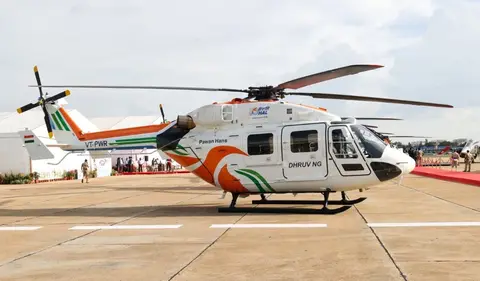
 INDIA DEFENCEDhruv NG Helicopter Explained: What HAL Has Actually Put Into Pawan Hans Service
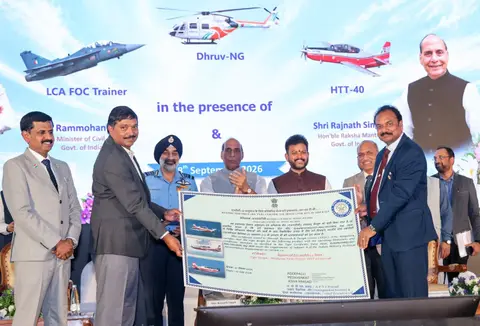 INDIA DEFENCELCA FOC Trainers Delivered With HTT 40 and Dhruv NG as Rajnath Singh Asks Engineers for Technologies That Do Not Exist
 DEFENCE INDUSTRYTata Zorawar light tank clears Army's L1 hurdle for Rs 20,000 crore contract
 DEFENCE INDUSTRYIndia Belgium Defence Deals Sealed As PM De Wever Visits Delhi
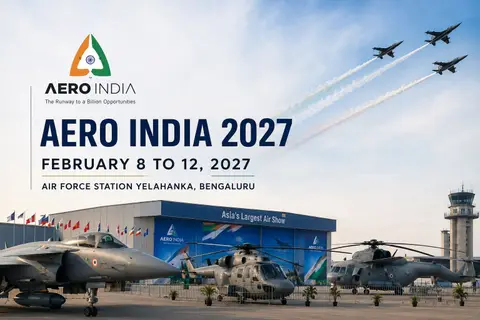 DEFENCE INDUSTRYAero India 2027 Dates Confirmed for February 8 to 12 in Bengaluru
Integrated theatre commands are the centrepiece of an ongoing reform of India's higher defence organisation. The aim is to reorganise elements of the Indian Army, the Indian Navy and the Indian Air Force so that, in a given geographical theatre or functional domain, all three services fight under a single commander rather than through separate service channels.
It is important to stress that this is a reform in progress. Proposals have been studied and debated, and elements are being implemented in stages, but the final number, design and command arrangements of the theatre commands have not been settled at the time of writing. The subject should therefore be understood as an ongoing and evolving process rather than a completed structure, and specific configurations described in public discussion are best treated as proposals until they are formally established.
Why the reform is being pursued
At present, each service is organised into its own set of commands. The Army, Navy and Air Force each have their own regional command structures, which means that in a single geographic area there may be several service commands operating in parallel, reporting up separate chains to their respective headquarters. Advocates of reform argue that this arrangement can duplicate effort, complicate joint planning and slow decision-making in a conflict where land, sea, air, space and cyber effects must be combined quickly and coherently.
The theatre-command model seeks to address this by placing the forces relevant to a theatre under one operational commander, who would be responsible for planning and conducting operations there, while the individual service chiefs concentrate on raising, training and equipping their forces. This division between operational command and force generation is a common feature of joint military systems studied around the world, and its adoption would represent a substantial cultural as well as structural change for the Indian services.
How the reform is being taken forward
The drive towards jointness was given institutional weight by the creation in 2019 of the post of Chief of Defence Staff, supported by the Department of Military Affairs. A key part of the Chief of Defence Staff's mandate is to facilitate the reorganisation of the services into theatre commands, and much of the detailed planning has been driven from that office in consultation with the service headquarters.
Publicly discussed proposals have included the idea of theatre commands oriented towards particular land frontiers and a maritime theatre command covering the sea domain, along with functional commands for tasks such as air defence. India already has experience of joint structures on which the reform can build, including the tri-service Andaman and Nicobar Command and the Strategic Forces Command, both of which draw on all three services and demonstrate that joint command is workable in the Indian context.
- The reform aims to unify operational command in each theatre under a single officer.
- Service chiefs would focus on raising, training and equipping their forces.
- The exact number and boundaries of the commands remain under discussion.
- Existing joint bodies provide precedents on which the new structures can build.
Implementing such a reform involves significant questions of doctrine, resource allocation, legal authority and inter-service culture, and progress has been deliberate. The balance between joint theatre commands and the existing single-service commands, such as the Air Force's operational and functional structure, is among the issues still being worked through, particularly the apportionment of scarce assets like air power. Because the details continue to evolve, coverage of theatre commands is best framed as describing a reform being implemented rather than a fixed order of battle, and readers should treat any specific structure as provisional.