
 INDIA DEFENCEDhruv NG Helicopter Explained: What HAL Has Actually Put Into Pawan Hans Service
 INDIA DEFENCELCA FOC Trainers Delivered With HTT 40 and Dhruv NG as Rajnath Singh Asks Engineers for Technologies That Do Not Exist
 DEFENCE INDUSTRYTata Zorawar light tank clears Army's L1 hurdle for Rs 20,000 crore contract
 DEFENCE INDUSTRYIndia Belgium Defence Deals Sealed As PM De Wever Visits Delhi
 DEFENCE INDUSTRYAero India 2027 Dates Confirmed for February 8 to 12 in Bengaluru
The Strategic Forces Command is the tri-service formation responsible for the management, custody and operational readiness of India's nuclear-capable delivery systems. Established in the years following India's declaration of nuclear-weapon status, it functions as the military arm of the country's nuclear command arrangements and draws its personnel and assets from all three services. As one of India's established joint commands, it is frequently cited as a model of how forces from the different services can be brought together under a single structure.
The command exists within a framework designed to keep nuclear weapons firmly under civilian political control. The apex decision-making body, the Nuclear Command Authority, comprises a political council and an executive council, with the authority to order the use of nuclear weapons resting with the political leadership. The Strategic Forces Command sits below this structure and is charged with translating any such direction into operational effect, as well as with the routine tasks of maintaining, exercising and safeguarding the arsenal. This clear separation between political authority and military custody is central to India's nuclear governance.
Role and responsibilities
The core responsibility of the command is to ensure that India's nuclear-capable forces are ready, secure and reliable. This encompasses the storage, handling and maintenance of delivery systems, the training of crews, and the planning and rehearsal of procedures so that the force can respond to political direction. The command is also closely associated with India's declared nuclear posture, which emphasises a credible minimum deterrent and a stated policy of no first use.
Because deterrence depends on the assurance that a retaliatory capability would survive an attack, survivability and dispersal of forces are central concerns. The command works with the strategic programmes that develop and produce delivery systems to bring new capabilities into service and to sustain those already fielded, and it plans for the security of its assets against a range of threats.
The nuclear triad
India has pursued a nuclear triad, the ability to deliver nuclear weapons by land, air and sea. Each leg is associated with different forces and platforms, and the triad as a whole is intended to guarantee that a retaliatory response would remain possible even if one leg were degraded.
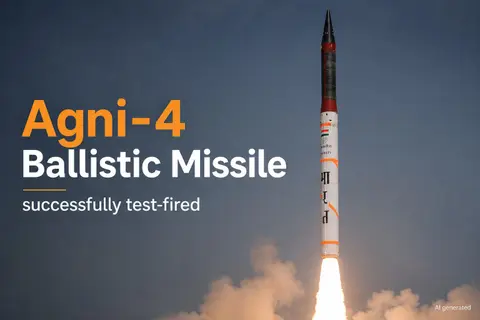
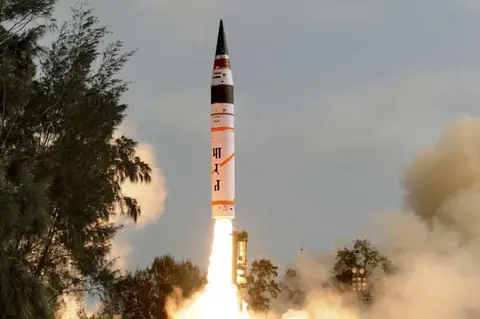
- Land-based missiles, including long-range systems such as the Agni-V, provide the most established leg of the triad.
- Air-delivered weapons rely on strike aircraft of the Indian Air Force.
- Sea-based systems, carried by ballistic-missile submarines of the Indian Navy, use weapons such as the K-15 and K-4 submarine-launched ballistic missiles.
The sea leg is regarded as particularly important for survivability, because a submarine on patrol is difficult to locate and therefore hard to neutralise in a first strike. The land, air and sea forces together are intended to provide an assured retaliatory capability consistent with India's declared doctrine, giving political decision-makers confidence that the deterrent would hold under pressure.
The Strategic Forces Command is one of India's established joint military structures, and as such it is often cited as a precedent in discussions of wider jointness, including the ongoing move towards integrated theatre commands that would extend joint command to conventional operations. Because it already integrates personnel, platforms and procedures from the three services under a single commander, it offers useful lessons in how joint staffing, training and command relationships can be made to work in practice. The higher coordination of the services, including the strategic domain, is supported by the office of the Chief of Defence Staff, created in 2019 to promote tri-service integration. Detailed information about the command's forces, deployments and readiness is closely held for reasons of national security, and public accounts are necessarily limited to broad, well-established facts about its role and place in India's nuclear architecture.