
 INDIA DEFENCEDhruv NG Helicopter Explained: What HAL Has Actually Put Into Pawan Hans Service
 INDIA DEFENCELCA FOC Trainers Delivered With HTT 40 and Dhruv NG as Rajnath Singh Asks Engineers for Technologies That Do Not Exist
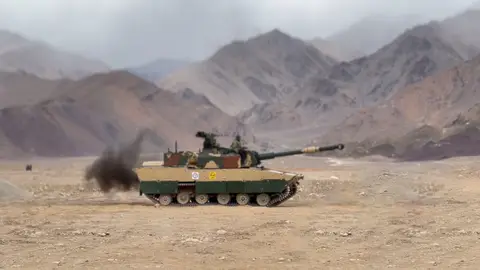 DEFENCE INDUSTRYTata Zorawar light tank clears Army's L1 hurdle for Rs 20,000 crore contract
 DEFENCE INDUSTRYIndia Belgium Defence Deals Sealed As PM De Wever Visits Delhi
 DEFENCE INDUSTRYAero India 2027 Dates Confirmed for February 8 to 12 in Bengaluru
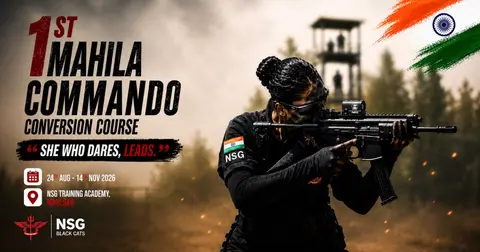
The National Security Guard is India's premier federal counter-terrorism force, popularly known as the Black Cats after the distinctive black assault uniform its operators wear. It was raised in the 1980s in the aftermath of a period of heightened terrorist and militant activity, with the specific purpose of providing the country with a specialised force capable of dealing with grave threats such as hijackings, hostage situations and terrorist attacks that lie beyond the capacity of ordinary police.
The National Security Guard functions under the Ministry of Home Affairs rather than the Ministry of Defence, which distinguishes it from the military special forces of the armed services. It is a force designed for domestic counter-terrorism and very high-risk contingencies, and it is deployed on the specific direction of the government rather than being routinely stationed for general policing duties.
Role and composition
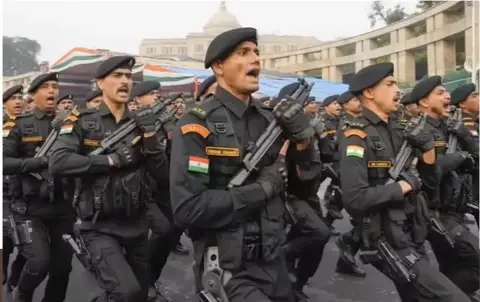
The force is often described as having two broad components. One element is oriented towards counter-terrorism and special-action tasks, and the other towards close protection of designated high-risk individuals. The counter-terrorism element is drawn substantially from the army, giving it a strong military character, while other elements draw personnel from the central armed police forces. This blended composition, combining military and police backgrounds, is a defining feature of the organisation.
- Hostage rescue and resolution of terrorist incidents.
- Counter-hijacking operations on aircraft, ships and other targets.
- Neutralisation of terrorist threats in built-up areas.
- Close protection of certain high-risk protected persons.
The National Security Guard is trained and equipped for rapid intervention. It maintains regional hubs in addition to its main base so that response times to incidents across the country can be reduced, an arrangement developed in the light of experience from major terrorist attacks in which the time taken to move the force to the scene proved critical. Its operators undergo demanding selection and training in skills such as close-quarter battle, intervention against fortified positions and rescue of hostages, and they train regularly with scenarios that mirror real threats.
Relationship to the armed forces
Because a substantial part of its strength is drawn from the Indian Army, the National Security Guard has close professional links with the military, and army officers and soldiers serve in it on deputation before returning to their parent service. Despite this, it is not part of the armed forces and should not be confused with military special forces such as the Para SF, which operate under the armed forces for military missions. The National Security Guard's remit is domestic counter-terrorism under the home ministry, whereas military special forces are oriented towards operations in support of the armed forces.
India's counter-terrorism architecture involves many organisations, and the National Security Guard is the force held for the most demanding intervention tasks. It complements, rather than replaces, the roles of the state police, the central armed police forces and the intelligence agencies, each of which has its own responsibilities in preventing and responding to threats. The armed forces, including the Indian Navy with its maritime commandos and the Indian Air Force with its air-base protection force, maintain their own specialised capabilities for the domains in which they operate.
Detailed information about the National Security Guard's strength, equipment and specific operations is restricted for reasons of security, and public descriptions are limited to its broad role and well-established history. What is clear is its place as the country's dedicated force of last resort for resolving the most serious terrorist and hostage emergencies. Its creation reflected a recognition that certain threats demand a highly trained, purpose-built intervention force that can be moved quickly to any part of the country, and its record has shaped how India prepares for and responds to major terrorist incidents. The National Security Guard therefore occupies a distinctive position at the intersection of policing and military capability, drawing on both traditions to meet threats that neither ordinary police nor conventional military units are configured to handle.