
 DEFENCE INDUSTRYBrahMos export orders: Vietnam deal worth about $100 million, Indonesia $200 million as Akash reaches Tajikistan, Turkmenistan
 DEFENCE INDUSTRYMahindra Embraer Nagpur facility to assemble C-390 if IAF picks the aircraft
 DEFENCE INDUSTRYSMPP Drone Manufacturing Push: Firm Shifts From Ammunition to Unmanned Warfare, Targets Integrated Defence Capabilities
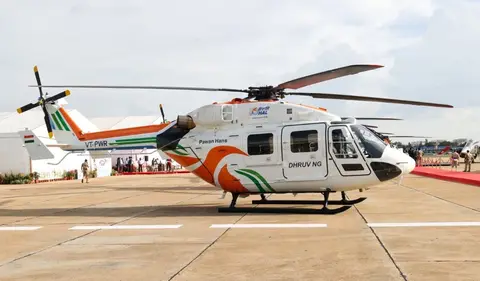 INDIA DEFENCEDhruv NG Helicopter Explained: What HAL Has Actually Put Into Pawan Hans Service
 INDIA DEFENCELCA FOC Trainers Delivered With HTT 40 and Dhruv NG as Rajnath Singh Asks Engineers for Technologies That Do Not Exist
Ashwini is an indigenous low-level transportable radar (LLTR) developed by the Defence Research and Development Organisation (DRDO) to detect low-flying aircraft and other aerial targets and to fill gaps in India's air-surveillance coverage. Designed for mobility, it can be moved to reinforce radar cover where it is thin or where higher-altitude radars are masked by terrain. This gap-filling role makes it a useful component of the country's layered network of military radar systems, addressing a part of the air-defence problem that is easy to overlook but hard to solve.
Low-level detection is one of the more difficult challenges in air defence. Aircraft flying close to the ground can hide behind hills, buildings and the curvature of the Earth, and their echoes must be picked out against strong clutter reflected from the surface and from moving objects such as vehicles. Attackers deliberately fly low precisely to exploit these effects and slip beneath radar cover. A radar optimised for this role, sited carefully to look down valleys and along likely approaches, therefore adds significantly to the completeness of the overall air picture.
Design and role
As a transportable radar, Ashwini is built to be deployed, set up and relocated relatively quickly, giving air-defence planners the flexibility to adjust coverage as the situation demands rather than being tied to fixed sites. It is understood to use a modern active electronically scanned array (AESA) design, allowing electronic beam steering, rapid scanning and good performance against small, slow or low targets that older radars might miss. Its function is to detect and track such threats and pass the resulting information into the wider air-defence network so that they can be engaged if necessary.
The radar was developed by DRDO's radar laboratory, the Electronics and Radar Development Establishment (LRDE), with production support from India's defence electronics industry, including Bharat Electronics Limited (BEL). It is intended to serve the Indian Air Force as a gap-filler complementing longer-range surveillance radars, and its mobility also lends itself to supporting the Indian Army in defending forward areas where fixed radar cover may be lacking.
Place in the air-defence network
Gap-filling low-level radars are most valuable when their data is combined with that of other sensors rather than viewed alone. A single low-level radar covers only a limited area, but many such radars, plus longer-range surveillance systems, can together create a seamless picture with few blind spots. Ashwini is designed to feed into integrated command-and-control networks such as the Integrated Air Command and Control System, so that the low-level tracks it generates become part of a single, unified air picture used for decision-making and for directing weapons.
- Type: low-level transportable air-surveillance radar
- Primary role: detecting low-flying targets and filling coverage gaps
- Developer: LRDE (DRDO), with BEL support
- User: Indian Air Force
By tackling the specific challenge of low-altitude detection with an indigenous, mobile system, Ashwini strengthens a layer of the air-defence network that is critical in practice, because it is exactly the layer that a determined attacker will try to exploit. It complements fixed and long-range surveillance radars and works in concert with the tracking and fire-control systems that engage threats once they are detected. As it enters wider service, it adds depth and resilience to India's ability to see and respond to threats that try to slip in beneath higher-altitude radar cover, reinforcing the country's steady progress towards a comprehensive, largely indigenous air-defence shield. The growing threat posed by small drones and low-flying stand-off weapons has only increased the importance of radars able to see clearly at low altitude, giving systems of this kind a prominent place in India's plans for defending both military installations and vulnerable civilian areas.