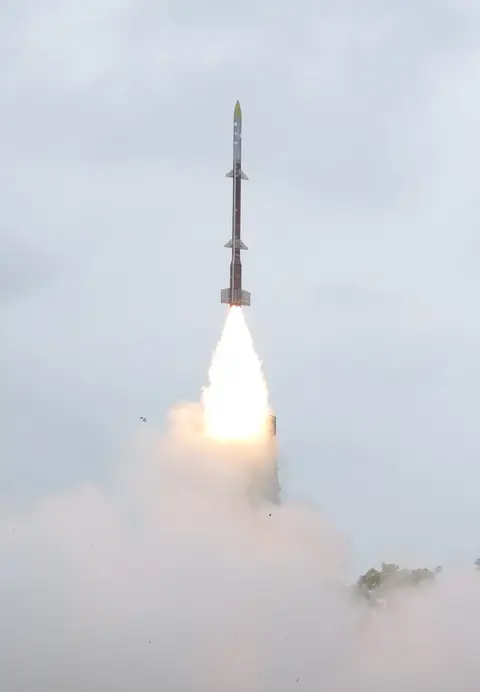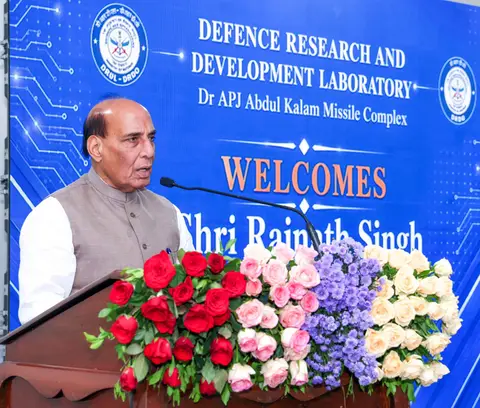

 DEFENCE INDUSTRYBrahMos export orders: Vietnam deal worth about $100 million, Indonesia $200 million as Akash reaches Tajikistan, Turkmenistan
 DEFENCE INDUSTRYMahindra Embraer Nagpur facility to assemble C-390 if IAF picks the aircraft
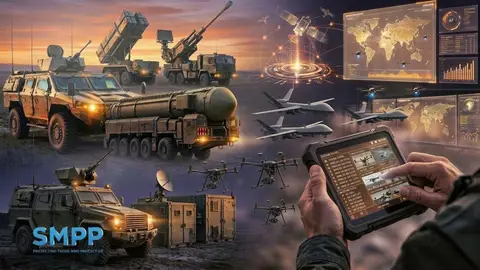 DEFENCE INDUSTRYSMPP Drone Manufacturing Push: Firm Shifts From Ammunition to Unmanned Warfare, Targets Integrated Defence Capabilities
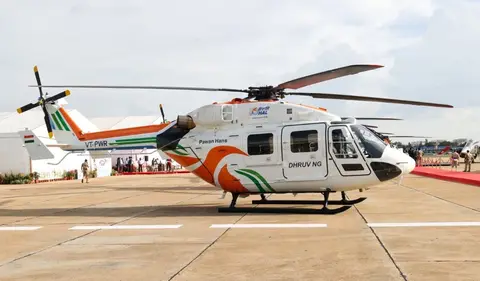 INDIA DEFENCEDhruv NG Helicopter Explained: What HAL Has Actually Put Into Pawan Hans Service
 INDIA DEFENCELCA FOC Trainers Delivered With HTT 40 and Dhruv NG as Rajnath Singh Asks Engineers for Technologies That Do Not Exist
Project Kusha is an ambitious effort by the Defence Research and Development Organisation (DRDO) to develop a long-range surface-to-air missile (LRSAM) system for India, together with the powerful radars needed to detect and engage targets at extended range. Still in development, the programme is intended to give India an indigenous long-range air-defence capability broadly comparable to imported systems, with its radar network forming a key part of the wider family of military radar systems. Because the details are still being finalised, published figures on the system should be treated as provisional.
The system is envisaged as a layered air-defence shield able to engage a variety of aerial threats, including aircraft, cruise missiles and precision-guided munitions, at long distances. To do this it requires long-range surveillance and fire-control radars capable of searching large volumes of sky, tracking many targets at once and guiding interceptor missiles against them with precision. These radars are being designed to be a central, indigenous element of the programme rather than an imported add-on, which is one of the features that distinguishes Kusha from simply buying a foreign system.
Radar and system concept
Kusha is planned around interceptors of differing ranges, allowing the engagement of targets at several distance bands within a single, integrated architecture. This layered approach means a threat can be engaged first at long range and, if it survives, again as it closes, greatly increasing the probability of a successful defence. Long-range active electronically scanned array (AESA) radars are expected to provide the search, track and fire-control functions, giving the system the ability to handle multiple simultaneous threats, a necessity in the face of coordinated or saturation attacks.
As the programme is still under development, published details on exact ranges, radar specifications and timelines remain provisional and are best treated with caution until the system is fielded and demonstrated. What is clear is the intent: to field a top-tier air-defence system that India controls end to end. The country already operates the imported S-400 Triumf long-range system, and Kusha is widely described as the indigenous programme meant to complement and eventually supplement such capabilities with a home-grown alternative.
Significance
Within a layered national air defence, Kusha would sit above shorter-range indigenous systems such as Akash and QRSAM, forming the outermost tier of a defensive umbrella. The programme draws on India's accumulated radar expertise, including experience from long-range tracking work in ballistic-missile defence, where the challenges of detecting and following fast, distant targets are closely related. This continuity of expertise, carried forward from one programme to the next, is one of the strongest arguments for pursuing an indigenous system rather than relying indefinitely on imports.
- Type: long-range surface-to-air missile system with indigenous radars
- Primary role: long-range air defence against aircraft and missiles
- Developer: DRDO
- Status: in development
Once operational, Kusha's radars and missiles are expected to be integrated into the national air-defence network so that they can share data and be directed through unified command and control such as the Integrated Air Command and Control System. For the Indian Air Force, a successful Kusha would mark a major step towards self-reliance at the top tier of air defence, reducing dependence on foreign systems for one of the most strategically sensitive capabilities a nation can hold. Its progress is closely followed as a measure of how far India's indigenous radar and missile technology has advanced, and as a signal of the country's long-term ambitions in this field. Building a long-range air-defence system entirely at home is among the most demanding undertakings a defence industry can attempt, drawing together advanced radar, missile propulsion, guidance and command-and-control technologies into a single integrated whole. Success would place India in a small group of nations able to field such capability independently, and would reduce its exposure to the political conditions and delivery uncertainties that can accompany major foreign purchases.