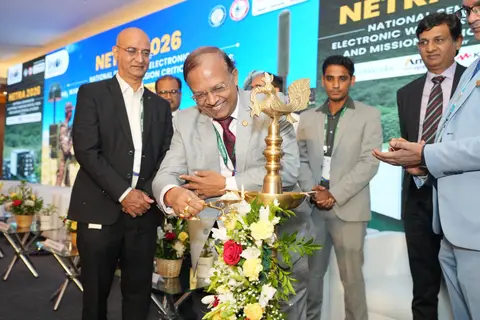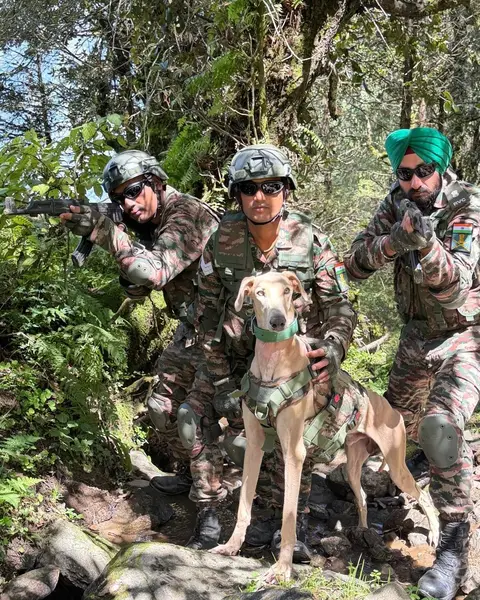

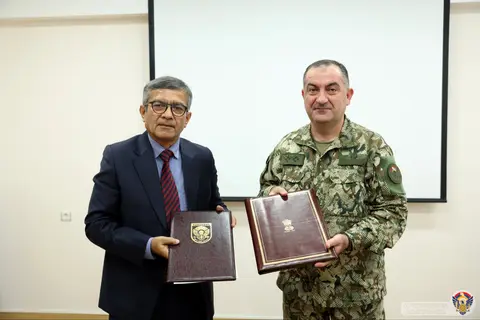
 DEFENCE INDUSTRYBrahMos export orders: Vietnam deal worth about $100 million, Indonesia $200 million as Akash reaches Tajikistan, Turkmenistan
 DEFENCE INDUSTRYMahindra Embraer Nagpur facility to assemble C-390 if IAF picks the aircraft
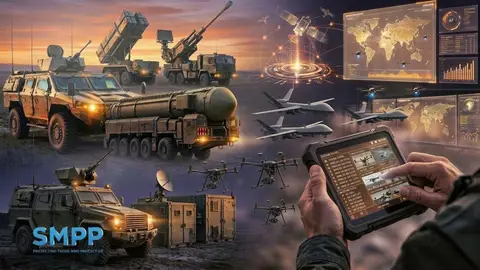 DEFENCE INDUSTRYSMPP Drone Manufacturing Push: Firm Shifts From Ammunition to Unmanned Warfare, Targets Integrated Defence Capabilities
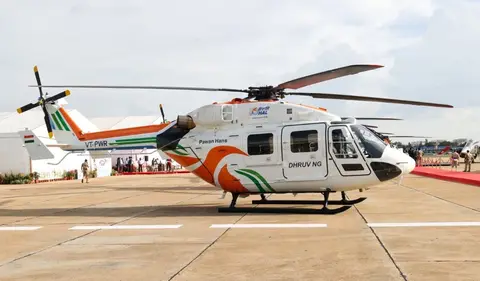 INDIA DEFENCEDhruv NG Helicopter Explained: What HAL Has Actually Put Into Pawan Hans Service
 INDIA DEFENCELCA FOC Trainers Delivered With HTT 40 and Dhruv NG as Rajnath Singh Asks Engineers for Technologies That Do Not Exist
Swathi is an indigenous weapon-locating radar (WLR) developed by the Defence Research and Development Organisation (DRDO) to detect incoming artillery shells, mortar bombs and rockets and, by tracking their trajectories, calculate the location of the weapons that fired them. This counter-battery capability allows friendly forces to return accurate fire against enemy guns, making Swathi an important asset for the Indian Army and one of the more visible indigenous entries in India's family of military radar systems.
The radar was designed by the Electronics and Radar Development Establishment (LRDE) and is produced by Bharat Electronics Limited (BEL). It uses a phased-array antenna to scan the horizon rapidly, picking up the ballistic arc of incoming projectiles and running back-plotting computations to fix the origin of the fire almost immediately. Because a phased-array beam can be repositioned electronically in a fraction of a second, the radar can keep watch over a wide arc while still following individual rounds closely enough to compute where they came from.
How weapon location works
When a shell, mortar or rocket is fired, it follows a predictable ballistic path shaped by gravity and air resistance. Swathi detects the projectile in flight, measures several points along its trajectory and extrapolates backwards to estimate the launch point, while also being able to project the path forward to warn of the likely impact area so that friendly troops can take cover. The radar can reportedly handle multiple projectiles fired simultaneously from different locations, sorting and prioritising the threats and building a list of hostile firing positions for counter-battery fire.
Speed and survivability are essential to the mission. A weapon-locating radar that lingers in one place risks being detected and targeted itself, so Swathi is mounted on a high-mobility vehicle designed to move quickly, set up rapidly and displace again after a short period of operation. This shoot-and-scoot approach lets it support manoeuvring formations while reducing its own vulnerability to the very counter-fire it helps direct.
Service and exports
Swathi has been inducted by the Indian Army in numbers and has become a notable success story for Indian defence electronics. It has also featured in India's defence-export efforts, with variants supplied to friendly countries, demonstrating that an indigenous system can meet the standards demanded by external customers. A lighter version optimised for mountainous terrain has been developed to provide counter-battery coverage in high-altitude sectors, where the standard vehicle-mounted system is harder to deploy and where much of India's most sensitive frontier lies.
- Type: phased-array weapon-locating radar
- Primary role: counter-battery detection of guns, mortars and rockets
- Developer: LRDE (DRDO); produced by BEL
- User: Indian Army, plus export customers
As a battlefield surveillance sensor, Swathi complements the wider range of radars India fields, from air-defence and fire-control systems such as the Rajendra radar to naval and airborne sensors. Where fire-control radars support the shooting down of aircraft and missiles, Swathi addresses the ground-combat problem of silencing enemy artillery, a capability that can strongly influence the outcome of a land battle. Its success demonstrated that India could design and field a complex, mobile phased-array radar for a demanding tactical mission, and it stands as a leading example of indigenous radar technology in frontline service. Continued upgrades aim to improve its range, reliability and performance in difficult terrain, reinforcing the artillery arm's ability to detect and swiftly neutralise hostile firing positions. In an era when artillery, rockets and mortars remain among the deadliest weapons on the battlefield, the ability to locate and silence enemy guns quickly is a powerful advantage, and a proven indigenous system that delivers it has become a valued part of the Indian Army's firepower and a template for further home-grown battlefield sensors.