
 DEFENCE INDUSTRYBrahMos export orders: Vietnam deal worth about $100 million, Indonesia $200 million as Akash reaches Tajikistan, Turkmenistan
 DEFENCE INDUSTRYMahindra Embraer Nagpur facility to assemble C-390 if IAF picks the aircraft
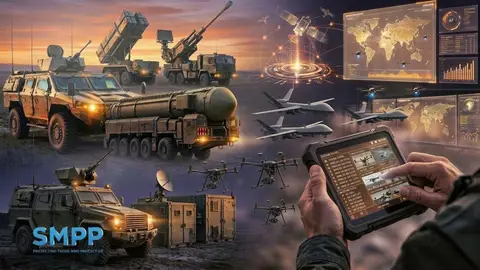 DEFENCE INDUSTRYSMPP Drone Manufacturing Push: Firm Shifts From Ammunition to Unmanned Warfare, Targets Integrated Defence Capabilities
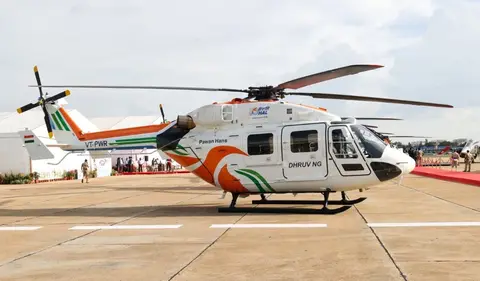 INDIA DEFENCEDhruv NG Helicopter Explained: What HAL Has Actually Put Into Pawan Hans Service
 INDIA DEFENCELCA FOC Trainers Delivered With HTT 40 and Dhruv NG as Rajnath Singh Asks Engineers for Technologies That Do Not Exist
Uttam is an indigenous active electronically scanned array (AESA) radar developed for combat aircraft by the Electronics and Radar Development Establishment (LRDE) under the Defence Research and Development Organisation (DRDO). It is intended to give the Tejas light combat aircraft and future Indian fighters a modern, home-grown fire-control radar, reducing reliance on imported sensors for one of the most critical elements of a combat aircraft. As a fighter's radar largely determines what it can see and engage, mastering this technology domestically is a significant strategic goal.
An AESA radar replaces the single moving antenna of older mechanically scanned designs with an array of many small transmit-receive modules, each of which can send and receive signals independently. This architecture allows the radar beam to be steered electronically at high speed, to search and track many targets at once, to operate in several modes almost simultaneously and to resist jamming by spreading its energy in ways that are hard to counter. AESA radars are also generally more reliable, because the failure of a few modules degrades performance only gradually rather than disabling the whole radar. Building such a radar domestically is technically demanding, and Uttam is a flagship effort in India's push for self-reliance in advanced military electronics.
Development and flight testing
The Uttam programme has progressed through extensive ground testing and airborne trials, with the radar flown on test aircraft to validate its performance in realistic conditions across the modes a fighter needs, from long-range air-to-air search to mapping and tracking of surface targets. Maturing a fighter radar is a lengthy process: hardware must be proven, but so must the software that runs its many modes, and the whole system must be integrated with the aircraft's mission computer, displays and weapons before it can be cleared for operational use.
The stated goal is integration onto production Tejas aircraft, and the radar is a strong candidate for the more capable Tejas Mk2 now in development. As with any complex fighter radar, the exact fit across current and future variants continues to be finalised, and timelines have shifted as the technology matures. The radar is designed in a modular, scalable way, so that arrays with different numbers of modules can be tailored to aircraft of different sizes. This flexibility is intended to let the same core technology serve a range of platforms, from lighter fighters to larger combat aircraft, spreading the benefit of the development effort.
Strategic importance
A capable indigenous fighter radar closes one of the more significant gaps in India's ability to build a complete combat aircraft at home. Foreign radars often come with restrictions on how they may be modified, upgraded or exported, which can constrain a nation's freedom of action; a home-grown radar removes those constraints and allows continuous improvement under Indian control.
- Type: airborne AESA fire-control radar
- Primary role: multi-mode air-to-air and air-to-surface sensing for fighters
- Developer: LRDE, under DRDO
- Status: in development and flight testing, targeting Tejas integration
The programme is closely tied to India's aerospace and electronics industry. It works alongside Hindustan Aeronautics Limited (HAL), which builds the Tejas, while Bharat Electronics Limited (BEL) supports production of radar hardware, strengthening the domestic supply chain for airborne sensors and building the industrial base needed to sustain such radars in service over the long term. Uttam is part of a broader modernisation of military radar systems in India and, once fully operational, will give the Indian Air Force a domestically controlled radar that can be upgraded and adapted without external constraints. Its maturation is widely watched as an indicator of India's growing depth in cutting-edge defence electronics.