
 DEFENCE INDUSTRYBrahMos export orders: Vietnam deal worth about $100 million, Indonesia $200 million as Akash reaches Tajikistan, Turkmenistan
 DEFENCE INDUSTRYMahindra Embraer Nagpur facility to assemble C-390 if IAF picks the aircraft
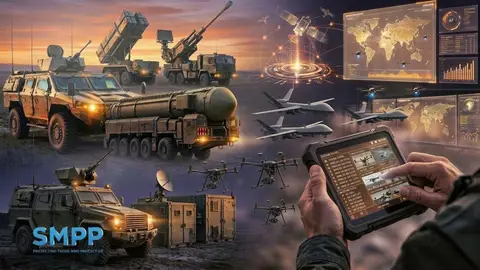 DEFENCE INDUSTRYSMPP Drone Manufacturing Push: Firm Shifts From Ammunition to Unmanned Warfare, Targets Integrated Defence Capabilities
 INDIA DEFENCEDhruv NG Helicopter Explained: What HAL Has Actually Put Into Pawan Hans Service
 INDIA DEFENCELCA FOC Trainers Delivered With HTT 40 and Dhruv NG as Rajnath Singh Asks Engineers for Technologies That Do Not Exist
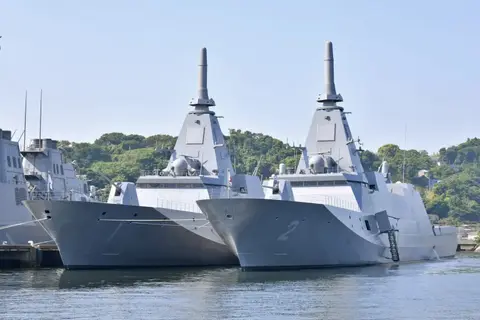
Naval and shipborne radars are the sensors fitted to warships that allow them to detect threats and targets across the surface and air domains and to guide their own weapons. On a modern warship of the Indian Navy, radar is arranged in layers, with different systems dedicated to long-range air surveillance, surface search, target tracking and weapon fire control. Together they form an important part of India's overall inventory of military radar systems, adapted to the particular demands of the sea.
Because a ship is a self-contained fighting unit that must defend itself and others without relying on land-based coverage, it carries its own comprehensive sensor suite. These radars must cope with a uniquely demanding environment. They have to detect low-flying anti-ship missiles against the confusing background of reflections from the sea surface, hold tracks despite the ship's own motion in heavy weather, and provide the precise data needed to guide the ship's missiles and guns against threats that may arrive with very little warning.
Types of shipborne radar
A typical warship's radar fit includes several categories of sensor, each optimised for a different task:
- Air-surveillance radars that scan the sky for aircraft and missiles at long range, often using three-dimensional or phased-array designs to provide height as well as range and bearing, giving early warning of an approaching air threat.
- Surface-search and navigation radars that detect ships, small craft and coastlines, support safe navigation and help build the surface tactical picture.
- Fire-control radars that track individual targets with high precision and guide the ship's missiles and guns onto them during an engagement.
Larger combatants increasingly carry active electronically scanned array (AESA) radars able to perform surveillance and multiple-target tracking simultaneously. This capability is essential for defending against saturation missile attacks, in which several weapons arrive at once and a mechanically scanned radar might be unable to track them all quickly enough.
Indigenous content and integration
India has steadily increased the share of indigenous radars aboard its warships as part of a broader drive to build ships that are Indian in both hull and systems. Bharat Electronics Limited (BEL), working with designs from DRDO laboratories including the Electronics and Radar Development Establishment (LRDE), has developed and produced naval surveillance and fire-control radars now serving on Indian ships, alongside some imported systems retained on certain platforms. This growing indigenous content reduces dependence on foreign suppliers for critical sensors and allows radars to be maintained and upgraded at home.
Aboard ship, these radars do not work in isolation. They feed into a combat-management system that fuses the sensor picture, tracks threats and links them to weapons, mirroring on a single hull the kind of integration that networks such as the land-based Integrated Air Command and Control System provide ashore. This lets a warship detect, prioritise, track and engage multiple threats in a coordinated way, and lets several ships in a task group share their pictures to defend one another.
As the Indian Navy expands and modernises its fleet with new destroyers, frigates and other combatants, shipborne radar continues to grow more capable and more indigenous. The trend strengthens the ability of Indian warships to protect themselves, to escort high-value units such as aircraft carriers, and to dominate the sensor picture in India's maritime areas of interest, making radar a quiet but decisive contributor to sea power. As unmanned aircraft, sea-skimming missiles and other low-signature threats proliferate, the demands on naval radar continue to grow, and India's steady investment in indigenous shipborne sensors is intended to keep its warships ahead of that curve. A modern combatant is only as effective as its ability to see, and radar remains the primary means by which a ship at sea perceives the world around it.