

 DEFENCE INDUSTRYBrahMos export orders: Vietnam deal worth about $100 million, Indonesia $200 million as Akash reaches Tajikistan, Turkmenistan
 DEFENCE INDUSTRYMahindra Embraer Nagpur facility to assemble C-390 if IAF picks the aircraft
 DEFENCE INDUSTRYSMPP Drone Manufacturing Push: Firm Shifts From Ammunition to Unmanned Warfare, Targets Integrated Defence Capabilities
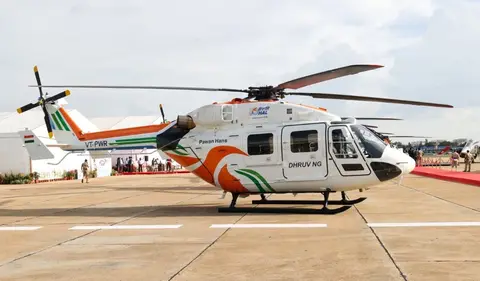 INDIA DEFENCEDhruv NG Helicopter Explained: What HAL Has Actually Put Into Pawan Hans Service
 INDIA DEFENCELCA FOC Trainers Delivered With HTT 40 and Dhruv NG as Rajnath Singh Asks Engineers for Technologies That Do Not Exist
The Electronics and Radar Development Establishment (LRDE) is the laboratory of the Defence Research and Development Organisation (DRDO) responsible for the design and development of radar systems. Based in Bengaluru, LRDE has been the principal source of India's indigenous radar technology and stands behind a large share of the country's military radar systems. Radar is a strategically sensitive technology that leading nations rarely share freely, so a national laboratory dedicated to designing it has been central to India's pursuit of self-reliance in defence.
Over the decades, the laboratory has evolved from working on comparatively simple surveillance radars to designing sophisticated phased-array and active electronically scanned array (AESA) systems. Its work spans ground-based air-surveillance and fire-control radars, battlefield and weapon-locating radars, naval sensors and airborne radars for fighter aircraft, reflecting the full breadth of India's radar requirements across the three services. This range of activity gives the laboratory a depth of experience that few institutions in the country can match.
Programme portfolio
LRDE's portfolio includes many of the systems now in Indian service. Among them are the Rajendra phased-array fire-control radar for the Akash missile, the Swathi weapon-locating radar for counter-battery operations, and the early Indra surveillance radars that helped establish India's radar-building capability. The laboratory is also developing the Uttam AESA radar for fighter aircraft, one of its most technically ambitious efforts, along with a range of low-level, mobile and naval radars intended to plug specific gaps in coverage.
This design work is closely tied to India's defence industry. Systems developed at LRDE are typically transferred for production to firms such as Bharat Electronics Limited (BEL), which manufactures many of the radars for the armed forces. The relationship between the design laboratory and the production base has been central to translating research into fielded capability, and it reflects a wider pattern in which DRDO designs a system and a public-sector or private manufacturer builds it at scale.
Role in self-reliance
Radar is a technology that many nations guard closely, and access to foreign systems often comes with restrictions on modification, upgrade and export. By building the capacity to design radars at home, LRDE has given India the ability to tailor sensors precisely to its own needs, to sustain and improve them over long service lives, and to develop new capabilities without waiting on the permission of an external supplier.
- Parent: DRDO
- Location: Bengaluru
- Focus: radar and related electronics design
- Users: Indian Army, Air Force and Navy
The laboratory's radars serve all three services, from counter-battery and air-defence radars used by the Indian Army to sensors that support the Indian Air Force and radars fitted to warships of the fleet. As India pursues ever more advanced systems, including radars for future missile-defence and fighter programmes, LRDE remains at the centre of the nation's effort to control this critical strand of defence technology. Its trajectory, from early surveillance radars to complex AESA arrays, mirrors the broader maturing of Indian defence electronics and its steadily rising ambition.
Beyond individual products, the laboratory contributes to the deeper ecosystem on which any radar effort depends: the design of transmit-receive modules, high-speed signal processing, specialised software and the test facilities needed to prove a radar before it enters service. Developing this base takes years and sustained investment, and it is here that a national laboratory adds value that a one-off purchase of foreign equipment cannot. The expertise resides in people and institutions as much as in any single radar, so each programme trains engineers and strengthens the pool of talent available for the next. As threats evolve and demand ever more capable sensors, that accumulated capability positions India to respond with home-grown solutions, and keeps LRDE central to the long-term goal of technological self-reliance in one of the most demanding fields of defence engineering.