
 DEFENCE INDUSTRYBrahMos export orders: Vietnam deal worth about $100 million, Indonesia $200 million as Akash reaches Tajikistan, Turkmenistan
 DEFENCE INDUSTRYMahindra Embraer Nagpur facility to assemble C-390 if IAF picks the aircraft
 DEFENCE INDUSTRYSMPP Drone Manufacturing Push: Firm Shifts From Ammunition to Unmanned Warfare, Targets Integrated Defence Capabilities
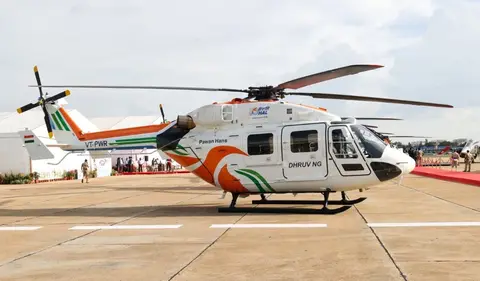 INDIA DEFENCEDhruv NG Helicopter Explained: What HAL Has Actually Put Into Pawan Hans Service
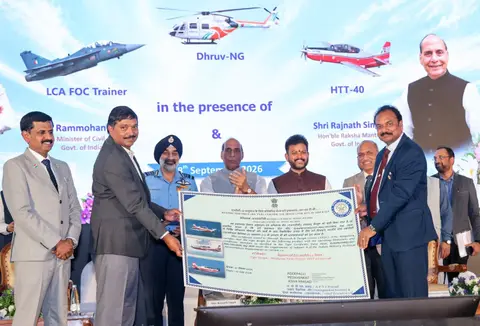 INDIA DEFENCELCA FOC Trainers Delivered With HTT 40 and Dhruv NG as Rajnath Singh Asks Engineers for Technologies That Do Not Exist
The T-90 Bhishma is the principal main battle tank of the Indian Army, acquired from Russia and subsequently licence-produced in India in large numbers. The Mk-3 designation refers to an upgraded standard intended to keep the fleet effective against evolving threats through improvements to protection, firepower, sighting and mobility. Upgrades of this kind are a normal part of the life-cycle of a tank fleet that has been in service for many years and is expected to soldier on for many more, and they represent a cost-effective way of preserving relevance without buying an entirely new vehicle.
Because upgrade configurations evolve through trials and negotiation, specific features and figures reported in the press should be treated as indicative rather than final. The broad direction, however, is well established and consistent with modernisation of similar tanks worldwide: better situational awareness, improved night fighting, enhanced survivability against modern munitions, and a more capable and reliable powerpack to carry the added weight of new equipment.
What the upgrade seeks to address
The original T-90 was a capable design for its era, but modern battlefields place growing demands on tanks. Advanced anti-tank guided missiles, top-attack munitions, drones and precision artillery all threaten armour in ways that were less prominent when the type was first fielded. Upgrade programmes aim to close these gaps and extend the tank's useful life without the cost and delay of an entirely new vehicle.
- Improved fire control and thermal sighting for day and night engagement
- Enhanced armour protection, including reactive and composite options
- A more powerful and reliable engine to sustain mobility with added weight
- Better commander's situational awareness and independent target acquisition
- Provision for future growth and integration of new systems
Protection improvements draw directly on domestic work in tank ammunition and armour technology, including composite and explosive reactive armour and advanced gun munitions developed for Indian service. Indigenous ammunition also matters for readiness, since these rounds are consumed in quantity in both training and war and are difficult to source at scale from abroad.
Upgrading a fleet of this size is a substantial undertaking in its own right. Each tank must be taken out of service, stripped, fitted with new subsystems and returned to its unit, all while maintaining enough operational strength on the borders. Managing this cycle across hundreds of vehicles, and ensuring that crews are retrained on the new equipment, is as much a logistical and organisational challenge as a technical one, and it shapes the pace at which the Mk-3 standard can spread through the force.
Production and the wider fleet
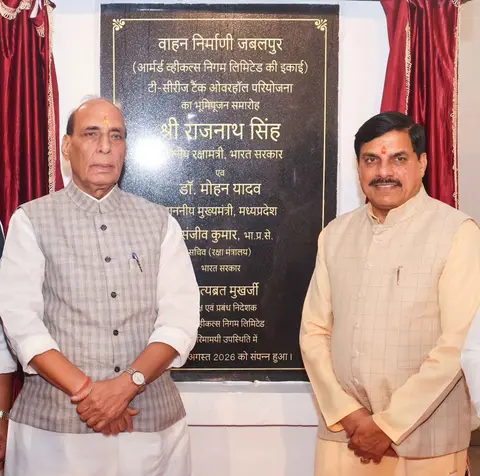
The T-90 has been built and upgraded in India at the Avadi complex, today under Armoured Vehicles Nigam Limited, with technology inputs from the DRDO and other members of the defence public sector. This indigenous base makes it possible to sustain and progressively modernise the fleet at home, rather than depending wholly on foreign support, and it builds skills that feed into future indigenous designs.
The Mk-3 effort should be seen against the backdrop of India's longer-term plans. The T-90 forms the modern heart of the armoured corps today, equipping many of its frontline regiments, while the planned Future Ready Combat Vehicle is intended to provide an eventual next-generation successor. Upgrading the T-90 buys time and capability during the long gestation of that programme, ensuring the Army's frontline armour stays credible in the interim and that a large existing investment is not wasted.
For the tank's place in India's overall inventory, see the overview of tanks used by India, where the T-90 stands alongside the T-72, the Arjun and the emerging lighter and future platforms as part of a layered armoured force. The steady improvement of the Bhishma illustrates how a mature design can remain a mainstay through disciplined, incremental modernisation.