
 DEFENCE INDUSTRYBrahMos export orders: Vietnam deal worth about $100 million, Indonesia $200 million as Akash reaches Tajikistan, Turkmenistan
 DEFENCE INDUSTRYMahindra Embraer Nagpur facility to assemble C-390 if IAF picks the aircraft
 DEFENCE INDUSTRYSMPP Drone Manufacturing Push: Firm Shifts From Ammunition to Unmanned Warfare, Targets Integrated Defence Capabilities
 INDIA DEFENCEDhruv NG Helicopter Explained: What HAL Has Actually Put Into Pawan Hans Service
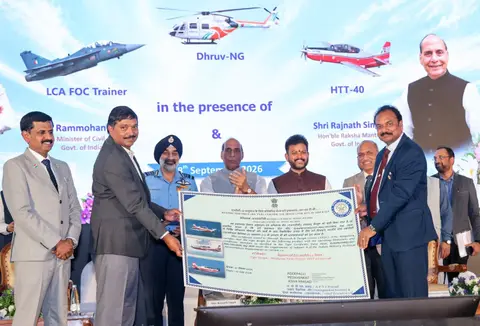 INDIA DEFENCELCA FOC Trainers Delivered With HTT 40 and Dhruv NG as Rajnath Singh Asks Engineers for Technologies That Do Not Exist
The Future Infantry Combat Vehicle (FICV) is a long-planned Indian Army programme to develop a next-generation tracked infantry combat vehicle. Its purpose is to eventually replace the large fleet of BMP-2 Sarath vehicles that has equipped the mechanised infantry for decades. The FICV is intended to be a more survivable, better-protected and more capable platform, reflecting how much the demands on infantry vehicles have grown since the BMP-2 was designed and how the threats they face have multiplied.
The programme has had a long and complicated gestation, moving through successive rounds of policy and procurement thinking without yet reaching series production. It remains a programme under development, and readers should treat specific configurations, participants and timelines as provisional pending firm contracts and trials. Its repeated delays have also made it something of a symbol of the wider challenges India faces in bringing complex indigenous armoured projects to fruition.
Why a successor is needed
The BMP-2 was designed in an earlier era with different assumptions about protection and firepower. Modern anti-tank weapons, mines, improvised explosive devices and drones have raised the bar for crew and passenger survivability, while commanders want better sensors, greater firepower and the ability to carry an infantry section into contact under stronger armour. The FICV is meant to answer these needs with a clean-sheet design offering room to grow over a long service life.
- Greater protection for the crew and the dismounted infantry it carries
- Improved firepower, including a modern cannon and anti-tank missiles
- Advanced sensors, fire control and battlefield networking
- Amphibious or high-mobility capability to keep pace with armour
- Growth potential for future upgrades and specialised variants
Anti-armour capability for such vehicles can draw on indigenous systems such as the Nag anti-tank guided missile, while protection benefits from Indian work in armour technology, allowing a future vehicle to balance survivability against the weight penalties that heavier protection imposes.
Designing a modern infantry combat vehicle is a genuinely difficult engineering task. It must be well protected yet mobile enough to accompany tanks, spacious enough to carry a section of infantry with their equipment, and armed powerfully enough to support them, all within acceptable limits of weight and cost. Reconciling these competing demands is one reason the FICV has proved so hard to bring to production, and why the Army's requirements have been refined repeatedly over the years.
Industry and the road ahead
The FICV has been closely tied to the goal of building domestic design and production capacity in armoured vehicles, with both private industry and defence public sector undertakings such as Armoured Vehicles Nigam Limited seen as potential contributors, supported by the DRDO. The programme has been viewed as a test case for the wider Make in India effort in complex armoured platforms, and for the ability of Indian industry to deliver a modern fighting vehicle largely at home.
The FICV is the infantry-vehicle counterpart to the tank-side Future Ready Combat Vehicle: together they represent the Army's intended next generation of tracked combat power for its armoured and mechanised formations. Fielding both would give India a modern, integrated combined-arms fleet designed around current and future threats rather than adapted from older designs, with common approaches to protection, networking and support.
The FICV's long history also carries wider lessons for Indian defence procurement. It has highlighted the difficulty of aligning ambitious requirements, industrial capacity and funding over the many years such a project demands, and the importance of stable, realistic specifications. How the programme is ultimately taken forward is likely to influence the approach adopted for other complex indigenous platforms.
Until the FICV matures and enters service, upgraded BMP-2s are expected to carry the load, sustained by domestic overhaul and modernisation. For the vehicle's place in India's combined-arms armoured force, see the overview of tanks used by India, where infantry combat vehicles work hand in hand with the tanks they accompany into battle, holding ground and clearing objectives that armour alone cannot secure.