
 DEFENCE INDUSTRYBrahMos export orders: Vietnam deal worth about $100 million, Indonesia $200 million as Akash reaches Tajikistan, Turkmenistan
 DEFENCE INDUSTRYMahindra Embraer Nagpur facility to assemble C-390 if IAF picks the aircraft
 DEFENCE INDUSTRYSMPP Drone Manufacturing Push: Firm Shifts From Ammunition to Unmanned Warfare, Targets Integrated Defence Capabilities
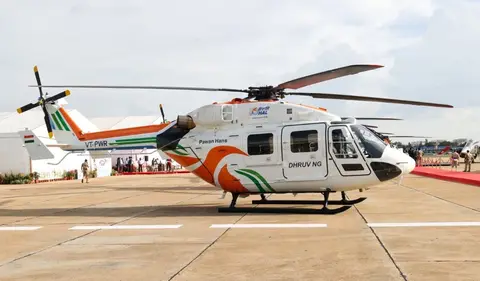 INDIA DEFENCEDhruv NG Helicopter Explained: What HAL Has Actually Put Into Pawan Hans Service
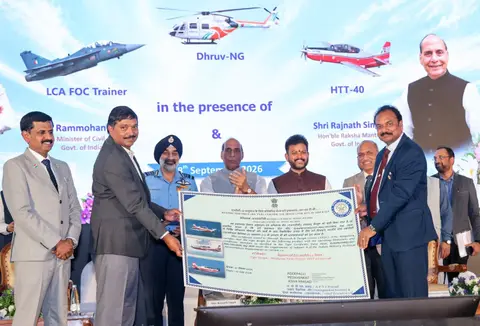 INDIA DEFENCELCA FOC Trainers Delivered With HTT 40 and Dhruv NG as Rajnath Singh Asks Engineers for Technologies That Do Not Exist
Armoured formations are only as mobile as the terrain allows, and rivers, canals, ditches, minefields and craters can halt an advance as effectively as enemy fire. To keep the tanks moving, the Indian Army fields a range of bridge-laying and combat engineering vehicles that clear obstacles, breach defences and bridge gaps under battlefield conditions. These support platforms are essential enablers of armoured warfare, even if they attract far less attention than the tanks they accompany, and their availability often decides whether an offensive can maintain its momentum.
Many of these vehicles are built on tank chassis so that they can keep pace with and share the mobility and protection level of the formations they support. Others, such as certain mobile bridging systems, are wheeled for rapid movement across the depth of the battlefield. The common thread is that they exist to preserve the tempo of armoured operations against a landscape and an enemy that constantly seek to slow them down.
Bridging systems
Gap crossing is a recurring challenge for armour, and one the enemy will deliberately exploit by demolishing bridges and canalising movement. Armoured vehicle-launched bridges, such as the BLT-T72 built on the T-72 chassis, allow a bridge to be laid across a gap directly from a protected vehicle, letting tanks cross and then recovering the bridge for reuse further forward. For wider or deeper crossings, systems like the indigenous Sarvatra mobile bridge, developed with the DRDO, provide multi-span bridging carried and launched from trucks.
- Armoured vehicle-launched bridges on tank chassis (BLT-T72)
- Sarvatra multi-span mobile bridging for wider gaps
- Armoured recovery vehicles to retrieve disabled or bogged tanks
- Engineering vehicles for obstacle clearance and breaching
- Mine-clearing and route-opening equipment
These systems are typically based on or matched to platforms drawn from the wider fleet described in the overview of tanks used by India, ensuring commonality of chassis, spares and mobility so that support vehicles can go wherever the tanks can.
Speed matters in gap crossing. A bridge that can be launched in minutes and recovered afterwards lets an armoured column cross a water obstacle before the enemy can react or bring fire to bear on the crossing site. The engineering effort is often carried out under threat, so protection for the crews laying bridges or clearing obstacles is an important design consideration, which is why so many of these vehicles are built on tank hulls rather than soft-skinned chassis.
Combat engineering and support
Beyond bridging, armoured engineers operate vehicles for mine clearance, obstacle breaching, earth-moving and the recovery of casualties among the armoured fleet. Armoured recovery vehicles, for instance, are vital for retrieving damaged or immobilised tanks under fire so they can be repaired and returned to service rather than abandoned to the enemy. Combat engineering vehicles can prepare fighting positions, clear rubble and open routes, tasks that keep an armoured advance from bogging down. This ecosystem of support vehicles is produced and sustained through India's defence industrial base, including Armoured Vehicles Nigam Limited.
Combat engineering support is integral to the way India's armoured divisions and regiments fight, allowing them to maintain momentum across obstacle-laden terrain and to recover from losses that would otherwise strand valuable equipment. These enablers work most closely with the main battle tanks of the fleet, such as the T-90 Bhishma, and their presence often determines whether an armoured thrust can be sustained deep into enemy territory.
As armoured platforms evolve and grow heavier and more complex, so too must the bridges, recovery vehicles and engineering equipment that keep them moving. Investment in these unglamorous but indispensable vehicles is a measure of how seriously an army takes the practical business of sustaining armoured operations, and India continues to develop indigenous solutions in this field alongside its combat vehicles.