
 DEFENCE INDUSTRYBrahMos export orders: Vietnam deal worth about $100 million, Indonesia $200 million as Akash reaches Tajikistan, Turkmenistan
 DEFENCE INDUSTRYMahindra Embraer Nagpur facility to assemble C-390 if IAF picks the aircraft
 DEFENCE INDUSTRYSMPP Drone Manufacturing Push: Firm Shifts From Ammunition to Unmanned Warfare, Targets Integrated Defence Capabilities
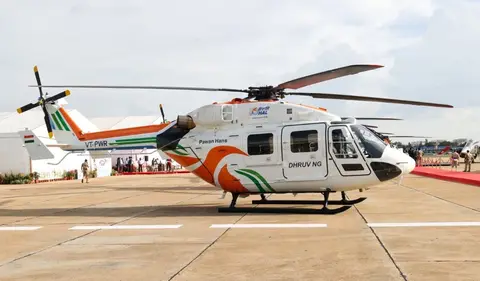 INDIA DEFENCEDhruv NG Helicopter Explained: What HAL Has Actually Put Into Pawan Hans Service
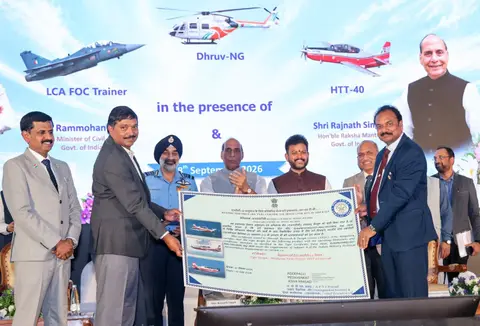 INDIA DEFENCELCA FOC Trainers Delivered With HTT 40 and Dhruv NG as Rajnath Singh Asks Engineers for Technologies That Do Not Exist
The BMP-2 Sarath is the mainstay tracked infantry combat vehicle of the Indian Army. Derived from the Soviet-origin BMP-2, it has been licence-produced in India for many years under the local name Sarath, meaning chariot. The vehicle equips the Army's mechanised infantry battalions, carrying infantry sections into battle alongside armoured formations while providing fire support with its automatic cannon and anti-tank missiles. Its combination of mobility, firepower and protected carriage of troops makes it a central element of Indian mechanised warfare.
As an amphibious, tracked platform, the BMP-2 is designed to keep pace with tanks across country and to cross water obstacles without lengthy bridging preparations. This ability to move with the armour it supports is what allows mechanised infantry to fight as part of a combined-arms team rather than lagging behind. Its long service and large numbers have made it one of the most recognisable armoured vehicles in Indian service, seen in exercises and parades alike.
Design and armament
The BMP-2 carries a crew and a section of infantry, with a compact two-man turret mounting an automatic cannon suited to engaging light armour, infantry, fortifications and low-flying threats. It also mounts anti-tank guided missiles, giving the vehicle a punch against heavier armour disproportionate to its size and weight. Its relatively light protection is a deliberate trade-off for amphibious capability, air-portability and mobility; the vehicle is meant to fight alongside tanks, not to substitute for them.
- Tracked, amphibious platform for mechanised infantry
- Automatic cannon effective against light armour and infantry
- Anti-tank guided missiles for engaging heavier armour
- Carries a full infantry section under armour
- Designed to operate in step with main battle tanks
Over its long service life the fleet has been the subject of upgrade efforts aimed at improving sensors, fire control and night-fighting ability, keeping an older design relevant against modern opponents. The vehicle can also be paired with contemporary anti-tank munitions such as the Nag anti-tank guided missile family developed in India, strengthening its lethality against enemy armour.
In service the BMP-2 has proved a versatile and adaptable platform. Its chassis has lent itself to specialised variants, including command, reconnaissance and support versions, and its amphibious capability is valued in a country crossed by numerous rivers and canals. Mechanised infantry mounted in the Sarath can move rapidly with the armour, dismount to fight on foot when required, and remount to continue the advance, giving formations a flexibility that purely foot-borne infantry cannot match.
Production, support and the future
Licence production and subsequent support of the Sarath have been anchored in India's defence industrial base, today reflected in entities such as Armoured Vehicles Nigam Limited and the broader network of defence public sector undertakings. This domestic manufacture has been important for sustaining and modernising a large fleet at home, building skills and supply chains that carry over to future programmes.
Because the BMP-2 is now a mature design, the Army has long sought a successor with better protection and growth potential. The planned Future Infantry Combat Vehicle is intended to eventually replace the Sarath with a more survivable, better-armed platform, though that programme remains in development and its timeline is uncertain. Until it matures, upgraded BMP-2s are expected to remain in front-line service for years to come.
The BMP-2 works most closely with India's tank fleet, and it is best understood as part of the combined-arms team described in the overview of tanks used by India. Alongside main battle tanks such as the T-90 Bhishma, the Sarath provides the infantry element that allows armoured formations to hold ground, clear defended positions and exploit breakthroughs, a role that has kept it central to Indian mechanised doctrine for a generation.