
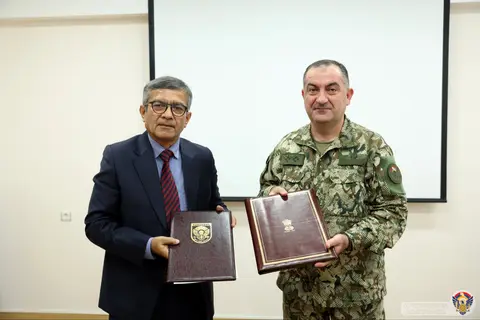
 DEFENCE INDUSTRYBrahMos export orders: Vietnam deal worth about $100 million, Indonesia $200 million as Akash reaches Tajikistan, Turkmenistan
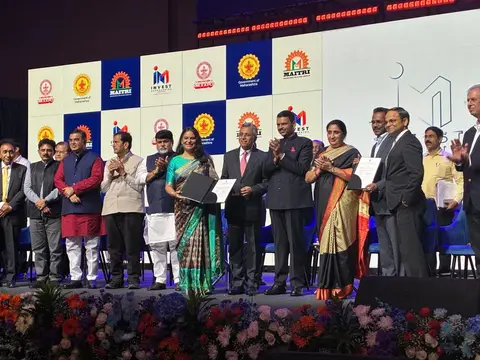 DEFENCE INDUSTRYMahindra Embraer Nagpur facility to assemble C-390 if IAF picks the aircraft
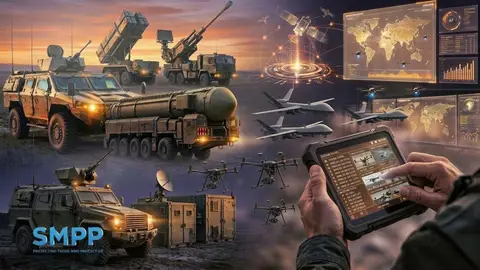 DEFENCE INDUSTRYSMPP Drone Manufacturing Push: Firm Shifts From Ammunition to Unmanned Warfare, Targets Integrated Defence Capabilities
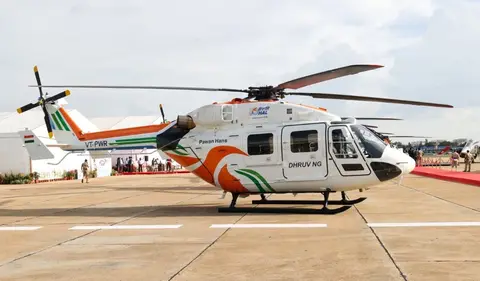 INDIA DEFENCEDhruv NG Helicopter Explained: What HAL Has Actually Put Into Pawan Hans Service
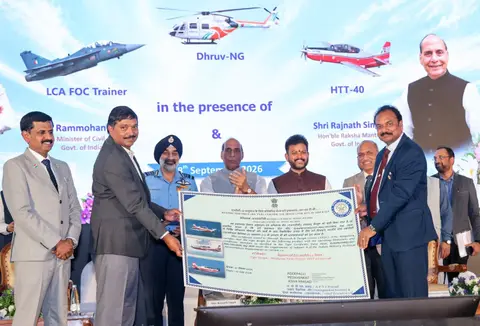 INDIA DEFENCELCA FOC Trainers Delivered With HTT 40 and Dhruv NG as Rajnath Singh Asks Engineers for Technologies That Do Not Exist
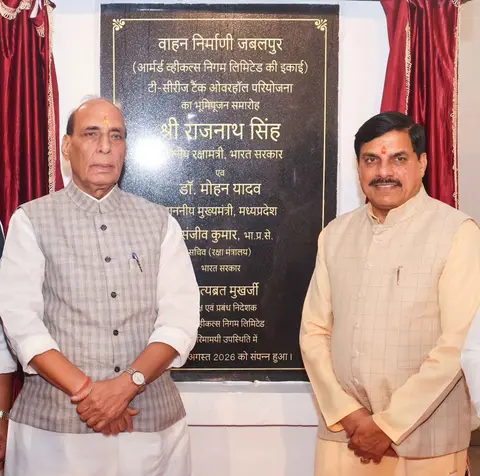
Armoured Vehicles Nigam Limited (AVNL) is an Indian defence public sector undertaking dedicated to the manufacture of tanks and armoured fighting vehicles. It was formed as part of the corporatisation of the former Ordnance Factory Board, when the board's many units were reorganised into a group of new government-owned companies. AVNL brought together the ordnance factories associated with armoured vehicle production, most notably the historic Heavy Vehicles Factory at Avadi near Chennai, long the centre of India's tank building.
AVNL sits at the heart of India's tracked armour supply chain, producing and supporting the platforms that equip the armoured and mechanised units of the Indian Army. Its work spans new-build vehicles, mid-life upgrades and the steady supply of spares and assemblies that keep large fleets operational across their service lives. In an arm where availability depends on a reliable flow of components, this sustainment role is as strategically important as new production.
Products and plants
The Avadi complex is best known as the home of India's main battle tank production, having built the licence-produced T-90 Bhishma and, earlier, the T-72 and the indigenous Arjun. AVNL's remit also extends to tracked infantry vehicles such as the BMP-2 Sarath, reflecting the concentration of India's armour manufacturing within this group of factories.
- Main battle tank production and assembly at Avadi
- Manufacture and support of tracked infantry combat vehicles
- Mid-life upgrades and overhaul of in-service fleets
- Supply of spares, sub-assemblies and components
- Support to allied and future armoured programmes
This industrial capacity is complemented by the design and technology work of the DRDO, which develops indigenous systems, armour and munitions that AVNL and its partners help to industrialise and produce at scale. The relationship between designer and manufacturer is central to converting research prototypes into fielded equipment.
Building tanks is among the more demanding tasks in defence manufacturing. It requires heavy engineering, precision machining, specialist metallurgy for armour and gun barrels, and the systems integration to bring together powerpacks, fire control, sensors and communications into a single reliable vehicle. AVNL's factories embody decades of accumulated experience in this field, and preserving and modernising that expertise is a national asset that cannot quickly be rebuilt if allowed to lapse.
Role in self-reliance
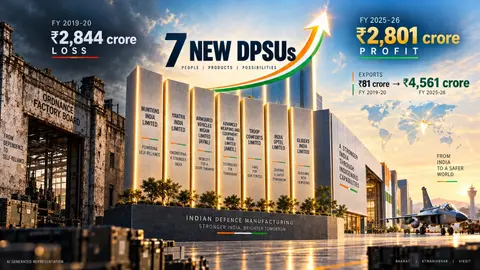
As one of the successor companies to the Ordnance Factory Board, AVNL is a pillar of India's push for self-reliance in defence manufacturing. Corporatisation was intended to give these units greater commercial flexibility, sharper accountability and a stronger orientation toward efficiency and exports, while retaining their strategic role in equipping the armed forces. AVNL works within the wider family of defence public sector undertakings that together supply the bulk of India's military hardware, from ships and aircraft to the armour built at Avadi.
Looking ahead, AVNL is positioned to contribute to future armour programmes, including production roles envisaged for the next-generation Future Ready Combat Vehicle. Its established lines, tooling and skilled workforce make it a natural manufacturing base as India moves from licence assembly toward indigenous design and production, and as new categories of vehicle enter development. The transition will test whether these historic factories can adapt to more competitive, technology-intensive work and to closer partnership with private industry and research bodies.
Beyond production, AVNL also has a growing interest in exports and in support services for the vehicles it builds. Selling armour abroad, or offering overhaul and upgrade packages to existing operators, would help sustain its lines between domestic orders and improve the economics of the enterprise, in line with the government's broader ambitions for defence exports.
For the full picture of the vehicles that pass through its gates, readers can consult the overview of tanks used by India, much of whose recent history runs directly through the workshops at Avadi. Understanding AVNL therefore means understanding a large part of how India's armoured corps has been equipped and how it will be equipped in the years to come.