
 DEFENCE INDUSTRYBrahMos export orders: Vietnam deal worth about $100 million, Indonesia $200 million as Akash reaches Tajikistan, Turkmenistan
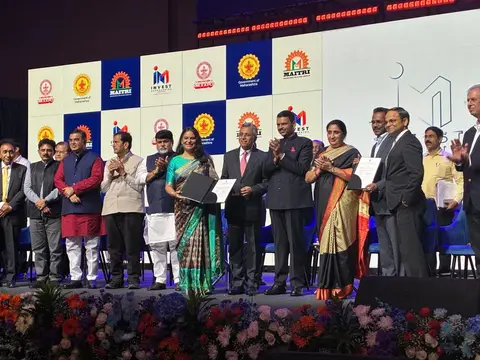 DEFENCE INDUSTRYMahindra Embraer Nagpur facility to assemble C-390 if IAF picks the aircraft
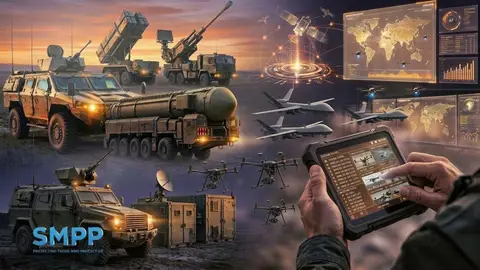 DEFENCE INDUSTRYSMPP Drone Manufacturing Push: Firm Shifts From Ammunition to Unmanned Warfare, Targets Integrated Defence Capabilities
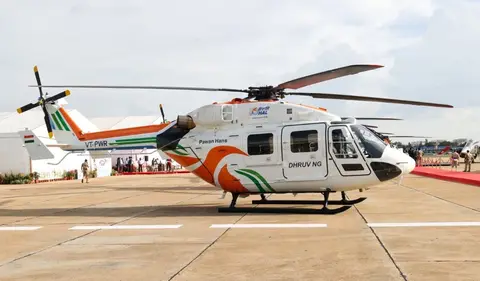 INDIA DEFENCEDhruv NG Helicopter Explained: What HAL Has Actually Put Into Pawan Hans Service
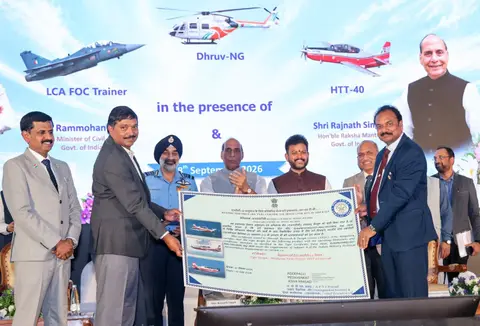 INDIA DEFENCELCA FOC Trainers Delivered With HTT 40 and Dhruv NG as Rajnath Singh Asks Engineers for Technologies That Do Not Exist
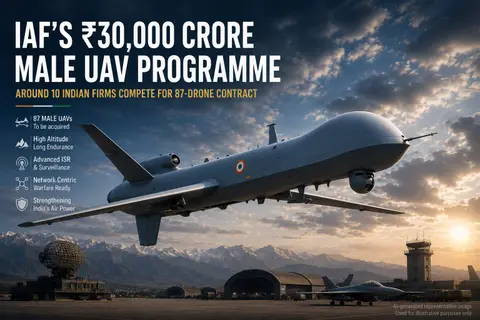
The Heron and Searcher families, built by Israel Aerospace Industries (IAI), have long served as the mainstay of India's unmanned intelligence, surveillance and reconnaissance (ISR) capability. Inducted in the years around the 1999 Kargil conflict, which exposed critical gaps in aerial surveillance along the mountainous frontier, these platforms established unmanned aviation as a permanent fixture across the Indian armed forces. They remain among the most widely operated systems within the broader landscape of military drones in India, and their long service has shaped how Indian commanders think about persistent aerial observation.
The Searcher is a tactical, shorter-endurance UAV used primarily for battlefield reconnaissance, artillery observation and border monitoring. It is designed to operate close to the forward edge of the battle area, feeding imagery to field formations. The larger Heron is a medium-altitude, long-endurance (MALE) platform capable of remaining aloft for extended periods and carrying heavier sensor payloads, including electro-optical and infrared cameras and synthetic aperture radar. Together they give commanders a persistent, layered picture of activity along India's frontiers, from the deserts of the west to the high Himalaya.
Service across the forces
Heron and Searcher variants are operated by the Indian Army, the Indian Air Force and the Indian Navy, reflecting their versatility across land and maritime domains. The Navy has used them for coastal and exclusive economic zone surveillance, watching shipping lanes and approaches to ports, while the Army and Air Force rely on them for monitoring the Line of Control and the Line of Actual Control. This tri-service adoption is unusual and speaks to the platforms' adaptability, as the same basic airframe has been tailored to very different operational needs.
India has progressively upgraded its Heron fleet over the years. Reported upgrade programmes, sometimes referred to under the Heron Mark II and Project Cheetah initiatives, aim to enhance endurance, satellite communications and, in some configurations, the ability to carry precision weapons. Any specific performance figures for these upgrades are best treated as reported rather than confirmed, but the overall direction is clear: moving the platform from a purely observational role towards an armed one, so that a drone that spots a target can also strike it.
Strategic significance and the road ahead
The reliance on IAI platforms has shaped India's wider drone ecosystem in two ways. It demonstrated the operational value of persistent ISR, encouraging commanders to expect continuous aerial coverage, and it highlighted the strategic risk of import dependence for such a critical capability. This awareness has driven indigenous efforts led by the DRDO, whose Nishant UAV was an early domestic attempt at a comparable tactical capability, and later the more ambitious Rustom series of medium-altitude, long-endurance drones.
Data gathered by Heron and Searcher feeds into India's integrated command networks and complements ground-based sensors such as military radar systems, improving the accuracy of the overall air and ground picture. This fusion of airborne and ground sensors is central to modern surveillance, allowing gaps in one system to be covered by another.
- Searcher: tactical reconnaissance and artillery observation near the front line.
- Heron: medium-altitude, long-endurance surveillance with heavier payloads.
- Upgrades: reported enhancements to endurance, communications and weaponisation.
The Heron and Searcher story illustrates a broader theme in Indian defence procurement: the pragmatic use of trusted foreign systems to fill urgent operational needs while indigenous alternatives are developed. As newer domestic MALE platforms mature, the Israeli fleet is expected to remain in service for years, both as a proven capability and as a benchmark against which home-grown designs are measured. For now, these Israeli-origin aircraft continue to provide the eyes that inform decisions from tactical patrols to national strategy.