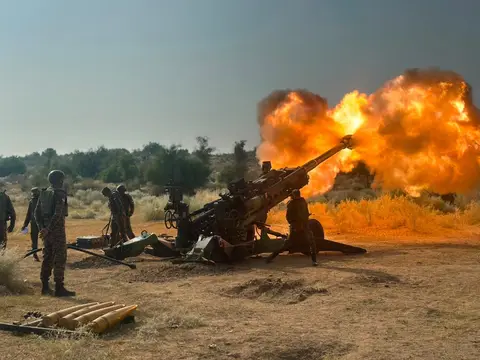

 DEFENCE INDUSTRYBrahMos export orders: Vietnam deal worth about $100 million, Indonesia $200 million as Akash reaches Tajikistan, Turkmenistan
 DEFENCE INDUSTRYMahindra Embraer Nagpur facility to assemble C-390 if IAF picks the aircraft
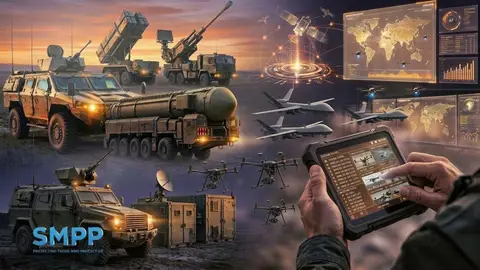 DEFENCE INDUSTRYSMPP Drone Manufacturing Push: Firm Shifts From Ammunition to Unmanned Warfare, Targets Integrated Defence Capabilities
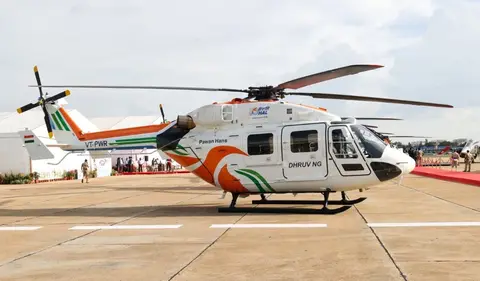 INDIA DEFENCEDhruv NG Helicopter Explained: What HAL Has Actually Put Into Pawan Hans Service
 INDIA DEFENCELCA FOC Trainers Delivered With HTT 40 and Dhruv NG as Rajnath Singh Asks Engineers for Technologies That Do Not Exist
Akashteer is an indigenous, automated air-defence control and reporting system designed to give Indian forces a unified, real-time picture of the airspace and to coordinate the weapons that defend it. Developed with BEL for the Indian Army, it is a command-and-control backbone rather than a single sensor or weapon, and it plays a growing role in defending against hostile aircraft, missiles and drones. It complements the wider ecosystem of military drones in India by anchoring the counter-drone side of the equation, ensuring that the threats posed by unmanned systems can be met with an equally networked defence.
Modern air defence depends less on any single interceptor and more on the network that ties sensors and shooters together. A missile is only as good as the information that directs it, and in a crowded, fast-moving airspace the challenge is often one of coordination rather than raw firepower. Akashteer is intended to automate the flow of information from multiple radars and sensors, build a common operating picture, and help commanders allocate the right weapon to each threat. By doing so it reduces reaction time and the risk of duplicated or fratricidal engagements, where two units might fire at the same target or, worse, at a friendly aircraft.
Integration and counter-drone role
Akashteer connects military radar systems and weapons into a coherent whole, and is designed to interoperate with the wider integrated air command and control efforts, including the Air Force's IACCS. This layered integration allows the Army's ground-based air defence to plug into a national picture rather than operating in isolation, which is essential when threats can cross service boundaries within minutes.
This capability is particularly valuable against small, low-flying drones, which are difficult to detect and engage individually, but which can be countered more effectively when sensors and effectors act as a single system. By automating detection and engagement decisions, Akashteer supports the layered use of weapons ranging from guns and short-range systems to surface-to-air missiles such as Akash and QRSAM. It also complements dedicated counter-drone systems that use jamming and other means to neutralise small aerial threats, deciding which tool is best matched to each incoming track.
Strategic significance
The system reflects a wider shift in Indian air defence towards networked, software-driven architectures that can absorb new sensors and weapons over time. Because much of its capability lies in software and data links rather than fixed hardware, it can be updated and expanded as new threats emerge, an important quality in an era of rapid change. As an indigenous product, it also reduces dependence on foreign command-and-control solutions, an important consideration for systems that sit at the very heart of national defence, where reliance on external suppliers could pose strategic risks. Domestic development further allows the system to be tailored to India's specific terrain, threats and existing weapons, and to be maintained and improved without seeking permission or support from abroad, a form of self-reliance that is as much strategic as it is technical.
- Role: automated air-defence command, control and reporting.
- Partner: developed with BEL for the Army.
- Value: faster, coordinated responses to aircraft, missiles and drones.
Akashteer illustrates how the decisive element of contemporary air defence is often the network rather than the missile. By fusing data from many sources and speeding decisions, it aims to make India's existing sensors and weapons more effective as a combined force. This capability is increasingly essential in an era of drone swarms and rapidly evolving aerial threats, where the side that sees and decides fastest holds a critical advantage. As adversaries field larger numbers of cheaper and smarter drones, the ability to automatically sort, prioritise and assign threats across a whole formation becomes not a luxury but a necessity, and it is precisely this automation that Akashteer is intended to provide.