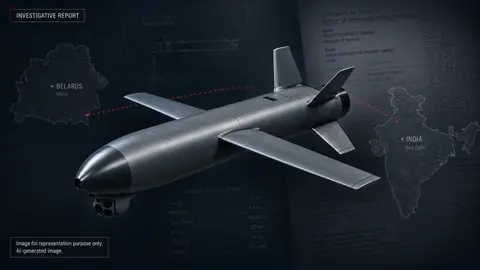

 DEFENCE INDUSTRYBrahMos export orders: Vietnam deal worth about $100 million, Indonesia $200 million as Akash reaches Tajikistan, Turkmenistan
 DEFENCE INDUSTRYMahindra Embraer Nagpur facility to assemble C-390 if IAF picks the aircraft
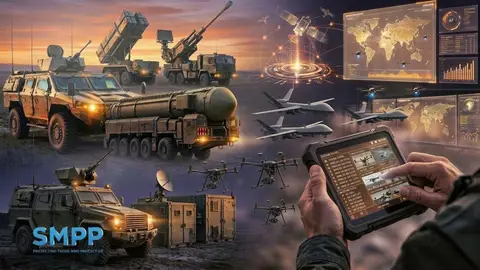 DEFENCE INDUSTRYSMPP Drone Manufacturing Push: Firm Shifts From Ammunition to Unmanned Warfare, Targets Integrated Defence Capabilities
 INDIA DEFENCEDhruv NG Helicopter Explained: What HAL Has Actually Put Into Pawan Hans Service
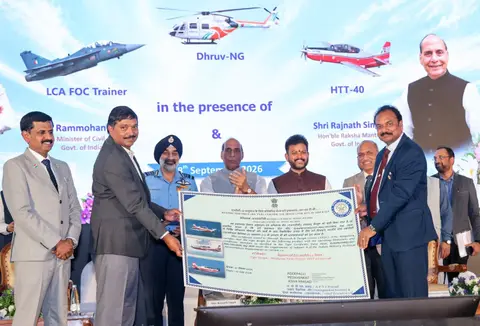 INDIA DEFENCELCA FOC Trainers Delivered With HTT 40 and Dhruv NG as Rajnath Singh Asks Engineers for Technologies That Do Not Exist
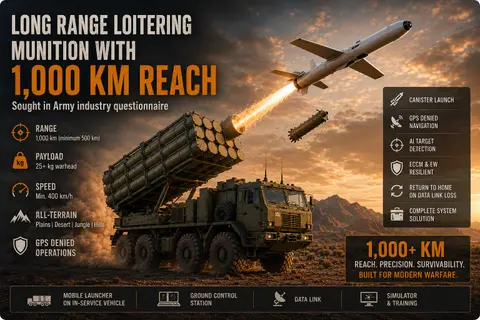
Nagastra-1 is an indigenously developed loitering munition, or kamikaze drone, created by Economic Explosives Limited, a subsidiary of Solar Industries, for the Indian Army. Designed to loiter over a target area before diving onto a designated target, it represents an important step in India's push for self-reliance in a category of weapon that has reshaped modern battlefields. It sits within the expanding family of military drones in India, and is one of the more prominent examples of private industry contributing directly to frontline capability.
A loitering munition blends the persistence of a surveillance drone with the destructive effect of a guided missile. Rather than being fired in a single ballistic arc like a shell or rocket, it can circle above the battlefield, allowing the operator to search for, track and then engage a target, or abort the strike if circumstances change. This flexibility makes such systems well suited to countering entrenched positions, vehicles and other high-value targets while limiting the risk of collateral damage, because the operator retains a human decision in the loop until the final moments.
Design and indigenous content
Nagastra-1 was reported to have been delivered to the Army following successful trials, and is notable for its high level of indigenous content, an important benchmark under India's self-reliance policies in defence manufacturing. It is a man-portable class of system, meaning it can be carried and launched by troops in the field rather than requiring a large launch installation. Guidance is provided using electro-optical and infrared sensors that let the operator see what the munition sees, and its warhead is intended for anti-personnel and soft-skin target roles.
The manufacturer has indicated that a wave-off and recovery feature allows the munition to be reused if a mission is aborted, an unusual capability for this class of weapon, since most loitering munitions are expended in a single flight. If a target cannot be positively identified, or the mission is called off, the drone can reportedly break away and be recovered by parachute for later use, improving cost-effectiveness during training and operations alike. This ability to abort and recover also reduces the risk of striking the wrong target, keeping a human firmly in control of the decision to attack until the last possible moment.
The development fits within a broader family of Indian loitering munitions and strike drones. It complements imported and licence-built systems such as the Harop and SkyStriker loitering munitions, offering a domestically produced option that reduces reliance on foreign supply chains and gives India greater control over production rates and costs.
Operational role and significance
Loitering munitions give ground commanders an organic precision-strike tool that does not depend on calling in air support or artillery from higher formations. For the Army, systems like Nagastra-1 are intended to bridge the gap between direct-fire weapons and longer-range assets, providing responsive firepower at the tactical level and shortening the time between spotting a target and engaging it.
- Origin: Economic Explosives Limited, a Solar Industries subsidiary.
- Role: man-portable precision loitering strike.
- Feature: reported wave-off and recovery capability for aborted missions.
The programme reflects the growing role of private Indian industry in defence manufacturing, working alongside established public-sector bodies such as the DRDO. As demand for expendable precision munitions grows, driven by lessons from recent conflicts around the world where cheap drones have had outsized effects, indigenous designs like Nagastra-1 are expected to be produced in successive, improved variants. The system underscores India's ambition not only to field advanced drones but to build them at home, controlling both cost and supply for a category of weapon that is now central to modern land warfare.