
 DEFENCE INDUSTRYBrahMos export orders: Vietnam deal worth about $100 million, Indonesia $200 million as Akash reaches Tajikistan, Turkmenistan
 DEFENCE INDUSTRYMahindra Embraer Nagpur facility to assemble C-390 if IAF picks the aircraft
 DEFENCE INDUSTRYSMPP Drone Manufacturing Push: Firm Shifts From Ammunition to Unmanned Warfare, Targets Integrated Defence Capabilities
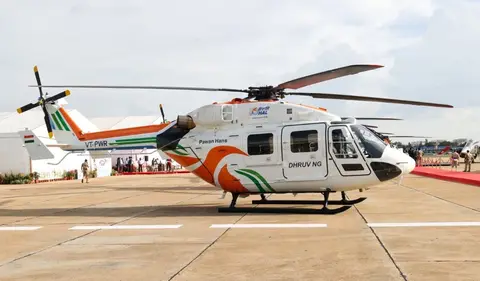 INDIA DEFENCEDhruv NG Helicopter Explained: What HAL Has Actually Put Into Pawan Hans Service
 INDIA DEFENCELCA FOC Trainers Delivered With HTT 40 and Dhruv NG as Rajnath Singh Asks Engineers for Technologies That Do Not Exist
Unmanned systems are extending from the air into the maritime domain, and the Indian Navy is pursuing a range of unmanned surface vehicles (USVs) and underwater vehicles (UUVs) to widen its reach across the Indian Ocean region. These programmes complement airborne platforms and form the maritime dimension of the broader family of military drones in India, adapting the logic of unmanned systems to the distinctive demands of the sea.
Naval drones cover a wide spectrum of roles. On the surface, USVs can conduct patrol, surveillance and force protection, act as communication relays, or carry sensors and weapons. Because they can operate for long periods without a crew, they are well suited to dull, dirty or dangerous tasks that would otherwise tie up a crewed warship. Below the surface, autonomous and remotely operated underwater vehicles support mine countermeasures, seabed mapping, harbour protection and anti-submarine search, tasks that are dangerous, time-consuming or repetitive for crewed vessels and their divers.
Programmes and partners
India's naval unmanned effort draws on public research through the DRDO, defence public-sector undertakings, and a growing number of private firms and start-ups that have entered the field. Development spans small surveillance craft to larger vessels intended for extended endurance and greater autonomy. Much of this work is still under development or in trials rather than in widespread frontline service, so specific capabilities, endurance figures and fleet numbers remain provisional and are best described in general terms.
The maritime environment poses distinct challenges that set naval drones apart from their airborne cousins. Long distances, harsh sea conditions, corrosive salt water, limited underwater communications and the need for reliable autonomy far from shore all complicate the task. Radio signals do not travel well underwater, so submerged vehicles must often operate with a high degree of independence, making decisions without constant human oversight. These demands make naval drones technically difficult but strategically valuable, particularly for a country with a vast coastline and expansive maritime interests to protect.
Strategic role in the Indian Ocean
Unmanned surface and underwater systems allow the Navy to maintain persistent awareness over large areas at lower cost and risk than crewed platforms alone. A network of drones can watch shipping lanes, screen the approaches to ports, monitor strategic chokepoints, and extend the sensor reach of larger warships, acting as forward eyes and ears. They can integrate with the wider network of military radar systems and command architectures, contributing to a shared maritime picture that informs decisions ashore and afloat.
- USVs: surface patrol, surveillance, force protection and relay.
- UUVs: mine countermeasures, seabed survey and anti-submarine tasks.
- Status: largely under development, with trials ongoing.
Naval drones also intersect with maritime security concerns, including the threat posed by hostile unmanned craft, which have been used elsewhere to attack ships and port facilities. This reinforces the importance of counter-drone systems at sea as well as on land, so that the same unmanned revolution that benefits the Navy does not become a vulnerability. As autonomy and endurance improve, unmanned vessels are expected to become an increasingly routine part of Indian naval operations, sharing the burden of surveillance and protection across the country's maritime frontier and freeing crewed ships for higher-end tasks. The Indian Ocean is vast and India's responsibilities within it are growing, so the ability to keep low-cost, uncrewed platforms on station for long periods offers a practical way to maintain awareness over an area no fleet could patrol by ship alone. Over time, unmanned surface and underwater vehicles are also likely to take on more demanding roles, from persistent anti-submarine tracking to acting as decoys or sensor pickets ahead of a task group, further multiplying the effect of a limited number of crewed warships.