
 DEFENCE INDUSTRYBrahMos export orders: Vietnam deal worth about $100 million, Indonesia $200 million as Akash reaches Tajikistan, Turkmenistan
 DEFENCE INDUSTRYMahindra Embraer Nagpur facility to assemble C-390 if IAF picks the aircraft
 DEFENCE INDUSTRYSMPP Drone Manufacturing Push: Firm Shifts From Ammunition to Unmanned Warfare, Targets Integrated Defence Capabilities
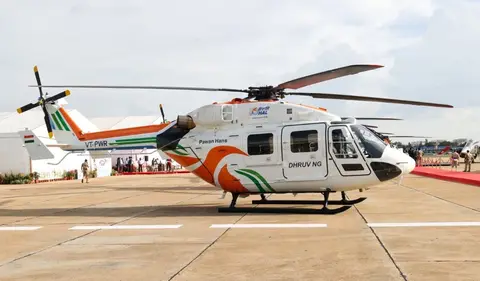 INDIA DEFENCEDhruv NG Helicopter Explained: What HAL Has Actually Put Into Pawan Hans Service
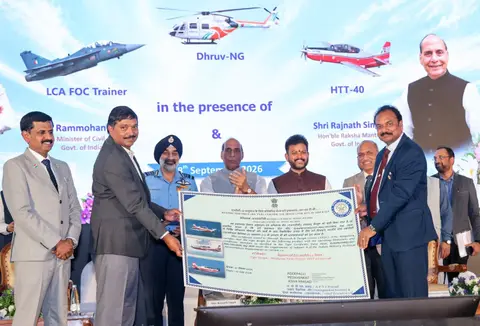 INDIA DEFENCELCA FOC Trainers Delivered With HTT 40 and Dhruv NG as Rajnath Singh Asks Engineers for Technologies That Do Not Exist
Nag is an indigenous third-generation anti-tank guided missile (ATGM) developed by the Defence Research and Development Organisation (DRDO) to give Indian forces a modern fire-and-forget capability against armoured vehicles. It is designed to defeat main battle tanks fitted with advanced protection and is complemented by a helicopter-launched variant known as HELINA. Nag is among the more advanced tactical weapons in the family of missiles in India.
Fire-and-forget capability
The defining feature of a third-generation ATGM such as Nag is its fire-and-forget guidance. Once the operator locks the seeker onto a target and launches, the missile guides itself to impact, allowing the crew to take cover or engage another threat immediately. Nag uses an imaging seeker for this purpose, which builds a picture of the target and tracks it autonomously. This is a significant advance over earlier wire-guided missiles that required the operator to keep tracking the target throughout the missile's flight, exposing the crew to counter-fire.
The missile typically attacks in a top-attack or direct mode, aiming to strike the more vulnerable upper or frontal areas of a tank where armour is thinner. Its warhead is designed to defeat modern protection, including certain reactive armour arrangements.
Fire-and-forget guidance also improves survivability for the launch crew, who no longer need to remain exposed while steering the missile all the way to the target. This lets anti-tank teams shoot and then immediately displace or seek cover, a significant advantage on a battlefield where the launch signature can quickly draw return fire. The imaging seeker further allows the operator to choose a precise aim point on the target before launch, improving the probability of a decisive hit against a well-protected vehicle.
Land-based Nag and NAMICA
For the Indian Army, the land-based Nag is carried on a dedicated tracked carrier, sometimes referred to as NAMICA, that provides mobility and protection while carrying and launching multiple missiles. This gives mechanised formations a potent counter to enemy armour, an important complement to the country's own tank fleet. The carrier allows the anti-tank teams to keep pace with advancing forces and to relocate quickly after firing.
HELINA and other variants
HELINA is the helicopter-launched version of the missile, intended to be fired from platforms such as attack and utility helicopters. Air launch extends the engagement envelope, letting the missile be used against armour from standoff distances and difficult angles, and giving air units their own precision anti-armour capability. A range of lightweight and man-portable anti-tank options has also been pursued in the broader indigenous effort, reflecting a family approach to anti-armour weaponry. Manufacture of such missiles has been associated with Bharat Dynamics Limited (BDL).
- Type: Third-generation anti-tank guided missile
- Guidance: Fire-and-forget imaging seeker
- Variants: Land-based Nag and helicopter-launched HELINA
- Developer: DRDO
Significance
Nag and HELINA have been widely reported as important additions to India's precision-strike inventory, reducing dependence on imported anti-tank missiles and giving both ground and air units a modern capability against armour. Their imaging seekers and fire-and-forget guidance place them among the more advanced weapons in their class. Within the wider landscape of missiles in India, the Nag family occupies the tactical anti-armour niche, complementing longer-ranged strike systems such as the Pralay battlefield missile and reinforcing the country's steady progress towards self-reliance in guided weapons across its defence ecosystem. Anti-tank missiles are consumed in large numbers in intensive fighting, so a secure indigenous source of supply carries particular strategic value, freeing planners from the delays and restrictions that can accompany imports. By covering both ground- and helicopter-launched roles, the Nag family also allows a common family of technology to serve several branches, spreading the benefits of the development effort more widely.