
 DEFENCE INDUSTRYBrahMos export orders: Vietnam deal worth about $100 million, Indonesia $200 million as Akash reaches Tajikistan, Turkmenistan
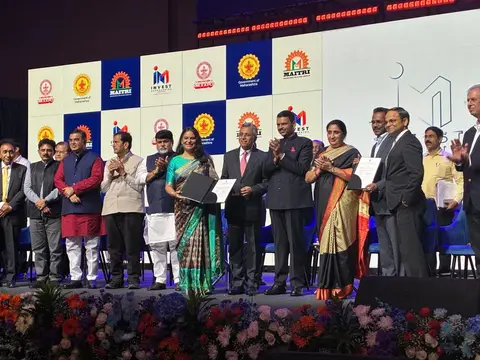 DEFENCE INDUSTRYMahindra Embraer Nagpur facility to assemble C-390 if IAF picks the aircraft
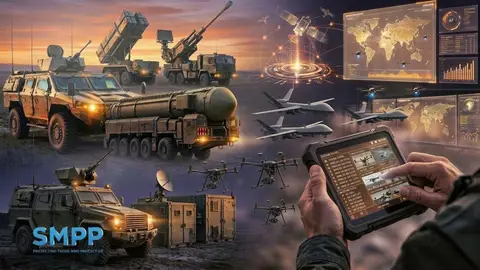 DEFENCE INDUSTRYSMPP Drone Manufacturing Push: Firm Shifts From Ammunition to Unmanned Warfare, Targets Integrated Defence Capabilities
 INDIA DEFENCEDhruv NG Helicopter Explained: What HAL Has Actually Put Into Pawan Hans Service
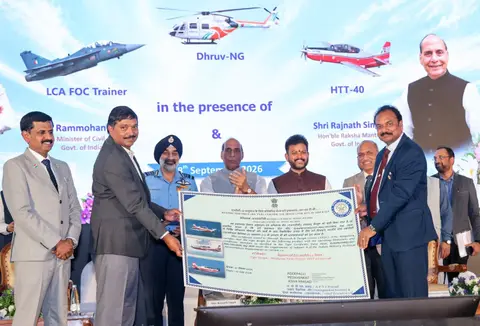 INDIA DEFENCELCA FOC Trainers Delivered With HTT 40 and Dhruv NG as Rajnath Singh Asks Engineers for Technologies That Do Not Exist
The Prithvi family is a series of short-range ballistic missiles that were India's first indigenously developed weapons of their kind. Created under the country's Integrated Guided Missile Development Programme by the Defence Research and Development Organisation (DRDO), the Prithvi missiles established foundational expertise in guidance, propulsion and systems integration that later underpinned much of India's missile effort and the wider family of missiles in India.
Origins and programme
The Prithvi programme began in the 1980s as part of a broader national effort to build indigenous guided-missile capability across several categories, from surface-to-surface to surface-to-air and anti-tank systems. As the first of these to reach fruition, Prithvi carried much of the technical risk of proving that India could design, test and field a ballistic missile without foreign assistance. The knowledge gained fed directly into later, more ambitious programmes.
The missiles were designed primarily to strike fixed targets such as airfields, logistics hubs and troop concentrations within a theatre. Their induction gave India an early indigenous surface-to-surface strike option and demonstrated the ability to move from design to fielded system domestically.
Variants and evolution
The family developed across several versions tailored to different services and roles. The initial Prithvi-I was configured for the Indian Army as a battlefield support system, while Prithvi-II was optimised for the Indian Air Force with extended range and a lighter payload. A longer-ranged Prithvi-III was developed with a naval orientation, and a ship-launched derivative known as Dhanush was adapted for the Indian Navy.
Early Prithvi variants used liquid propulsion, which offered flexibility during development but imposed handling and readiness constraints, since the missiles typically needed fuelling close to the time of launch. These lessons directly informed the shift towards solid-fuelled, canisterised designs seen in later programmes such as Agni Prime and the tactical Pralay missile. Reported ranges for the Prithvi variants place them firmly in the short-range class, with figures typically described in general terms.
Each variant was tuned to the priorities of its intended service. The Army versions focused on battlefield support at relatively short ranges, the Air Force version traded payload for greater reach, and the naval derivatives addressed the particular challenges of launching from a moving ship. This tailoring of a common design to different roles gave Indian planners early experience in adapting a missile platform across the services, a practice that has continued in later programmes. The variety within the family also helped spread the underlying technology across a wider base of users and maintainers.
Role and legacy
Within the story of India's guided weapons, the Prithvi family is frequently cited as the programme that seeded the technical base for the far longer-ranged Agni-V and other systems. It established the laboratories, test infrastructure and skilled workforce that subsequent programmes could build upon, and it proved the feasibility of indigenous ballistic-missile development to both planners and the wider public.
- Class: Short-range ballistic missile
- Variants: Prithvi-I, Prithvi-II, Prithvi-III and the ship-based Dhanush
- Services: Army, Air Force and Navy configurations
- Developer: DRDO
Current status
Over time, some early variants have been progressively superseded by newer solid-fuelled systems that offer better mobility and readiness. Nonetheless, the Prithvi family remains historically significant as the point at which India acquired an indigenous ballistic-missile capability, and elements of the family have continued in service and testing. The programme's true importance lies in the human and industrial capacity it created, expertise that flowed into successive generations of guided weapons and helped shape India's broader drive for self-reliance across its defence ecosystem, from strategic missiles to modern conventional systems. In this sense the Prithvi family is remembered less for any single technical figure than for opening the door to a far larger national capability that followed it.